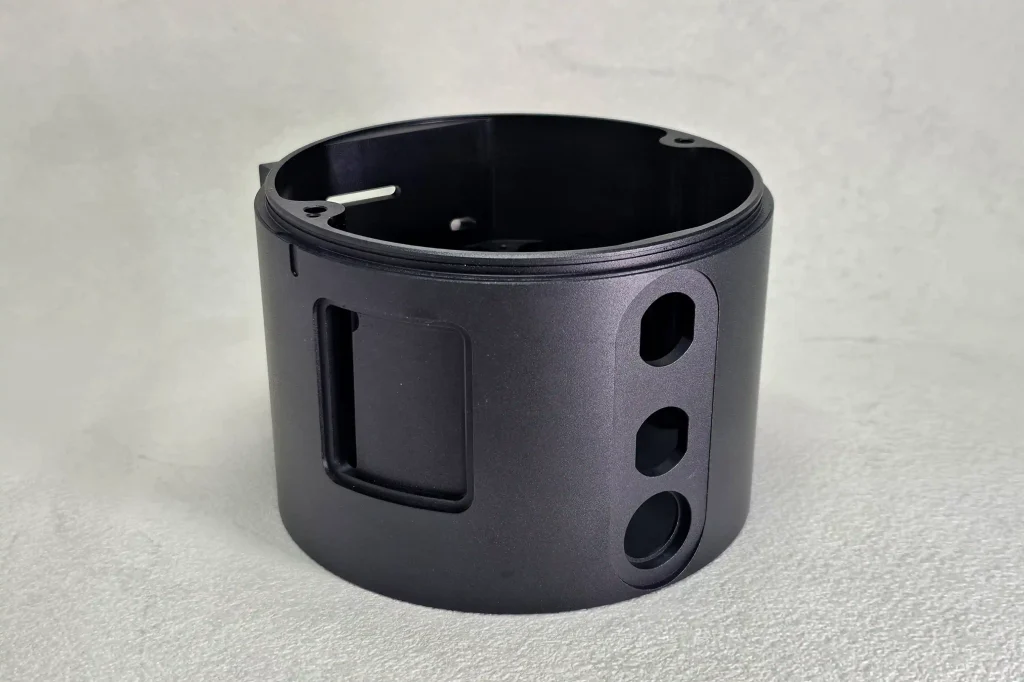
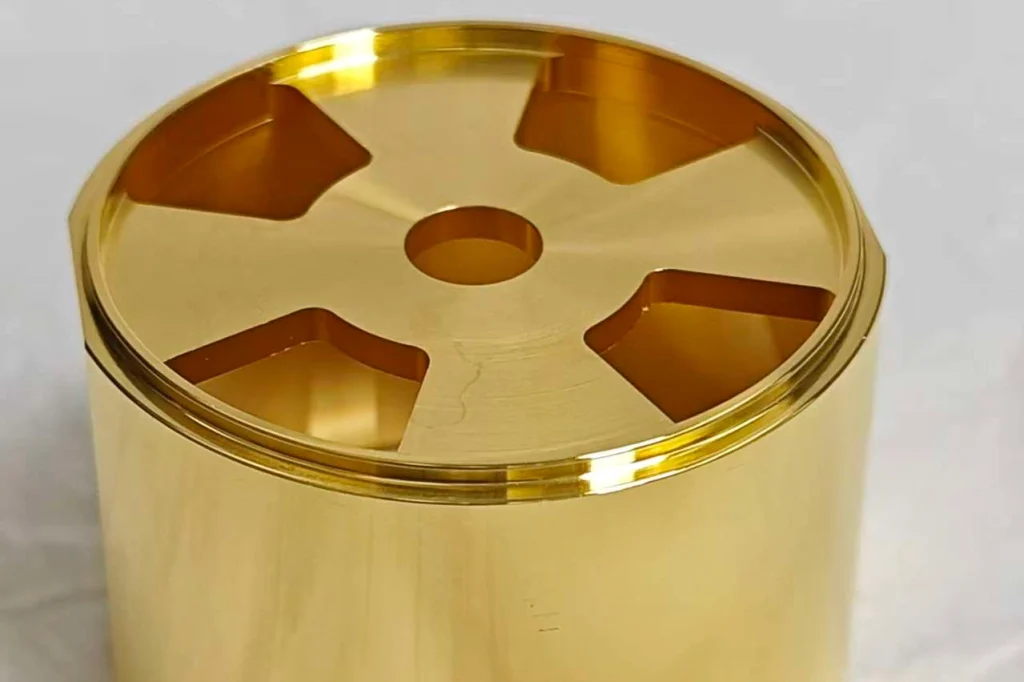
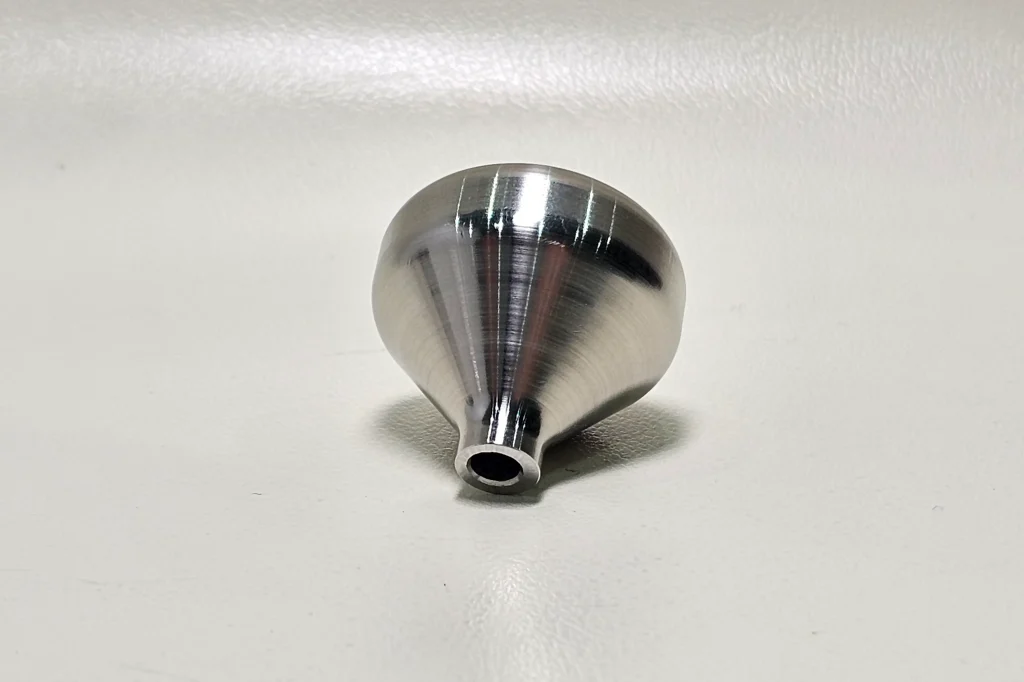
Chrome plating is a surface-finishing process that deposits chromium onto a base material to change how the finished part performs or looks. For CNC-machined parts, it is usually considered when a shaft, bore, sliding surface, tooling feature, or visible component needs a functional surface with improved wear behavior, controlled friction, corrosion protection, or a bright chrome finish.
Plating is one stage in a larger manufacturing sequence. Material choice, pre-plate surface condition, plating thickness, masking, post-plating grinding, and inspection requirements can all affect the final part. Looking at the process as a whole helps explain why the same chrome finish can perform very differently from one CNC component to another.
What Is Chrome Plating and Why Is It Used?
Chrome plating, also called chromium plating, is the electrochemical deposition of a chromium layer onto another material. The substrate may be steel, stainless steel, aluminum, brass, copper, or—in specialized decorative systems—plastic.
Chrome metal is the elemental metal chromium. A chrome coating is a relatively thin or thick deposited layer of chromium applied to a different base material. In other words, a chrome-plated steel shaft is still fundamentally a steel shaft; chromium changes the properties of its outer surface rather than replacing the mechanical properties of the underlying material.
Chrome plating uses chromium as a surface layer while retaining the bulk properties of the underlying material. The substrate supplies the part’s structural strength, toughness, machinability, and cost efficiency. The chromium deposit is selected to improve a surface-specific requirement.
Engineers commonly specify chrome plating for a combination of:
- Surface hardness and resistance to abrasive or sliding wear
- Controlled friction and surface behavior in moving assemblies
- Added protection against corrosion in suitable service conditions
- Dimensional restoration or buildup before final grinding
- A bright, reflective decorative chrome appearance
Chrome plating is therefore a surface treatment, not a universal material upgrade. Its performance depends on the coating, the adhesion between coating and substrate, the geometry of the part, the operating environment, and the condition of the base material beneath it. A damaged, porous, or improperly specified coating can still allow the underlying material to corrode or wear.

How Does the Chrome Plating Process Work?
By the time a part reaches the plating line, much of the outcome has already been set by machining. A rough surface, sharp edges, trapped burrs, or leftover contaminants can show up later as adhesion issues, uneven buildup, or visible defects.
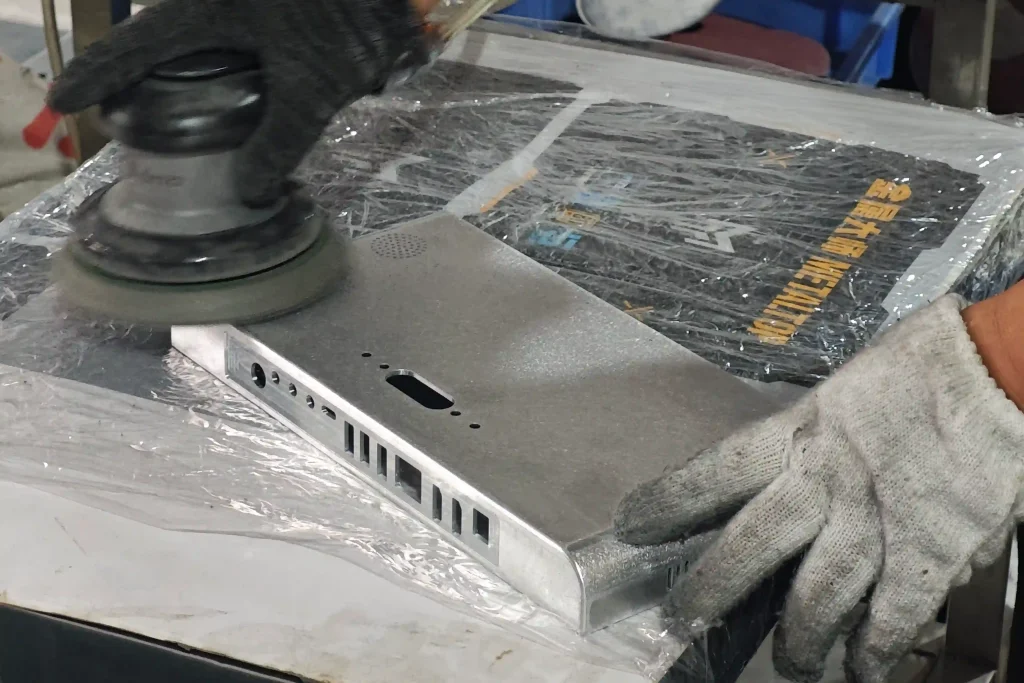
First, the machined component is evaluated for surface condition and geometry. A visible decorative part may need polishing or buffing before plating because chromium tends to reflect the quality of the substrate beneath it. A functional hard chrome surface may instead be machined with a defined plating allowance, then ground after plating to achieve its final diameter and finish.
The part is then cleaned to remove cutting fluid, oils, polishing compounds, oxides, fingerprints, and other contaminants. Surface activation follows. This step prepares the substrate so that the deposited layer can adhere properly. Stainless steel and aluminum need particular attention because naturally occurring oxide films can interfere with adhesion.
Some parts require an intermediate layer before chromium is deposited. In decorative nickel chrome plating, nickel is commonly used beneath the thin chromium layer. Nickel contributes much of the corrosion protection and visual depth, while the chromium top layer provides the characteristic blue-white appearance and additional surface durability. Aluminum commonly requires pretreatment and intermediate layers rather than direct conventional chromium deposition onto untreated aluminum.
Next, chromium is electroplated onto the prepared part. Areas that must remain uncoated—such as certain threads, sealing features, electrical contact zones, or tight mating surfaces—may be masked. Current distribution and part geometry influence deposit thickness, so recessed areas, sharp corners, and complex profiles deserve attention during design review.
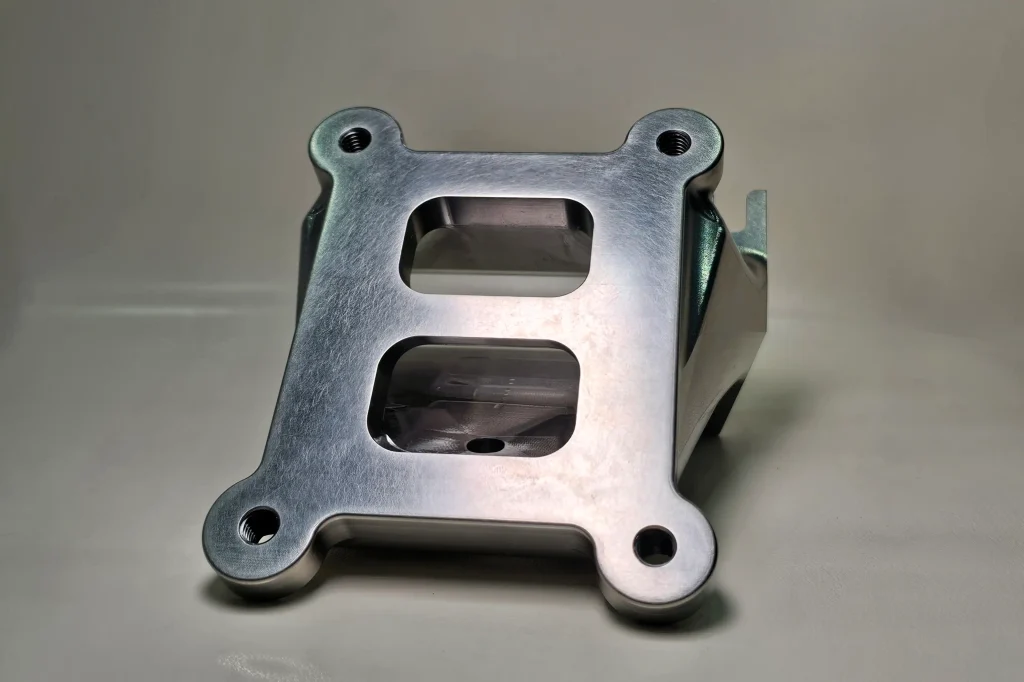
After deposition, the part may be polished, buffed, ground, or honed. Hard chrome plating often requires post-plating grinding when tight tolerances or controlled surface finish are required. The finished component is then inspected for thickness, adhesion, surface appearance, dimensions, and any application-specific requirements.
Hard Chrome vs. Decorative Chrome: What’s the Difference?
Hard chrome and decorative chrome both use chromium, but they are specified for different reasons.
Hard chrome plating is primarily a functional treatment. It is commonly used where a component needs a wear-resistant surface, dimensional buildup, or a hard sliding contact surface. Typical examples include shafts, hydraulic components, industrial tooling, machine elements, and wear surfaces.
Decorative chrome is primarily a visual and protective finish. It is commonly associated with automotive trim, hardware, consumer products, fixtures, and visible metal components. Decorative chrome is usually a very thin chromium top layer over nickel, and sometimes copper plus nickel, depending on the substrate and finish system.
| Factor | Hard Chrome | Decorative Chrome |
| Primary purpose | Functional surface performance | Appearance plus surface protection |
| Typical structure | Chromium deposit designed for engineering use | Thin chromium layer, commonly over nickel |
| Relative thickness | Usually thicker and specified for function | Usually much thinner chromium top layer |
| Wear resistance | Commonly selected for sliding and abrasive wear conditions | Provides limited scratch resistance but is not usually chosen for heavy wear service |
| Appearance | May be matte, satin, or polished depending on finishing | Bright, reflective, blue-white chrome finish |
| Typical applications | Shafts, hydraulic rods, molds, dies, tooling, machine components | Automotive trim, bathroom hardware, visible consumer components |
| Post-plating finishing | Grinding, honing, or polishing may be required for critical features | Buffing and cosmetic inspection are often emphasized |
Hard chrome finish requirements are usually tied to dimensions, surface roughness, wear conditions, and mating materials. Decorative chrome requirements are more likely to focus on brightness, reflectivity, color consistency, corrosion appearance, and freedom from visible defects.
A hydraulic rod and a visible appliance handle may both be chrome plated, yet their coating structures, thickness requirements, inspection criteria, and production priorities are very different.
What Materials Can Be Chrome Plated?
Chrome plating materials include several metals and, with specialized pretreatment, certain plastics.
Steel
Steel is one of the most common substrates for hard chrome plating. It offers a practical combination of strength, machinability, cost, and compatibility with many functional chrome-plating applications. CNC-machined steel shafts, rollers, rods, tooling components, and wear surfaces are frequent candidates.
For critical features, the drawing and manufacturing specification should account for pre-plate dimensions, required chrome buildup, post-plating finishing allowance, edge geometry, and masked areas.
Stainless Steel
Stainless steel can be chrome plated, but its passive oxide layer makes cleaning and activation especially important. The oxide film that gives stainless steel its corrosion resistance can also reduce plating adhesion if it is not properly prepared.
The reason to plate stainless steel is not always corrosion protection. An engineer may instead need a particular appearance, a specific sliding surface, a repairable coating system, or a surface compatible with another component in the assembly.
Aluminum
Aluminum typically requires more preparation than steel. Untreated aluminum is not generally sent directly into a conventional chromium deposition step. Its oxide layer and material properties often require pretreatment and intermediate layers, such as a zincate process followed by suitable strike or underplate layers.
This adds process complexity, so the design team should confirm early that plating is appropriate for the part’s geometry, alloy, tolerances, and intended service environment.
Brass and Copper
Brass and copper often appear in decorative plating systems, especially where a polished visual finish is required. Their surface condition can support attractive plated finishes, although the exact layer stack may vary with the application.
Plastic
Certain plastics can receive a chrome-plated finish, but the process differs substantially from plating metal. The surface usually needs specialized pretreatment and metallization before the chromium layer can be applied. For plastic components, resin type, molding quality, geometry, and cosmetic requirements all affect feasibility.
For plastic product housings, trim, or visible components, plating feasibility depends heavily on resin type, molding quality, geometry, cosmetic requirements, and thermal or mechanical exposure. If a project combines machined metal and polymer components, related guidance on CNC plastic machining can help clarify the material side of the design decision.

Chrome Plating Benefits and Limitations
Hard chrome is often used on surfaces exposed to repeated sliding, contact, or abrasive wear. A properly specified coating can protect the underlying substrate and extend the useful life of a shaft, tool, or machine component. That does not mean every chrome deposit will solve every wear problem. Adhesive wear, abrasive wear, impact, poor lubrication, misalignment, contamination, and high contact stress can produce very different failure modes.
Friction behavior also requires a practical view. A properly finished chrome surface can provide useful sliding characteristics in many assemblies, but friction is not a fixed property of chrome alone. The mating material, lubrication, surface finish, contact pressure, load, temperature, and motion all matter. A chrome-plated shaft paired with the wrong seal material or operating without adequate lubrication may not perform as expected.
Corrosion protection is another reason engineers specify chromium plating. Chromium itself forms a protective oxide layer, but a chrome-plated steel part can still corrode if the coating is damaged, cracked, porous, worn through, or insufficiently protective for the environment. In decorative nickel chrome systems, the nickel layer often provides a significant share of the corrosion-protection function. The substrate remains relevant because exposed base metal can corrode even if adjacent chromium remains intact.
Decorative chrome is valued for its bright, reflective appearance and relatively easy-to-clean surface. The visual result, however, is only as good as the preparation underneath it. Fine scratches, pits, sanding marks, and polishing defects can become visible in the final finish.
Common limitations include:
- Surface preparation can be labor-intensive, especially for cosmetic parts.
- Scratches, pitting, and substrate defects may remain visible or become more noticeable after plating.
- Hard chrome can develop microcracking, which must be considered for demanding corrosion applications.
- Plating adds material and can alter functional dimensions.
- Complex geometry can create nonuniform coating thickness because current distribution is not identical across every surface.
- Precision parts may need grinding, polishing, or honing after plating to meet final tolerances.
Chrome Plating Thickness and CNC Tolerance Considerations
Chrome plating thickness directly affects the finished dimensions of a part, so it needs to be defined during dimensional planning. Plating adds material to exposed surfaces. On an external diameter, the deposit increases the final size; inside a bore, it reduces the final size.
So, how thick is chrome plating? There is no single standard answer. Decorative chrome is usually a very thin surface layer, often below a few micrometers, while hard chrome can range from roughly 10 μm to several hundred micrometers in functional applications. The required thickness is shaped by the coating type, wear and corrosion requirements, substrate, dimensional tolerances, and any grinding or polishing planned after plating.
The dimensional effect depends on where the coating is applied. On an external cylindrical surface, for example, a 50 μm coating can increase the diameter by approximately 100 μm, assuming reasonably uniform buildup on both sides. Inside a bore, that same 50 μm coating can reduce the finished bore diameter by approximately 100 μm.
For CNC parts, thickness planning is especially important on:
- Critical bores and precision shafts
- Press-fit or clearance-fit features
- Bearing seats and bushings
- Sliding surfaces
- Threads and splines
- Sealing diameters
- Mating faces and tightly controlled flatness features
A plating allowance is the intentional dimensional offset machined into a feature before plating so that the plated and finished feature meets the drawing requirement. A shaft scheduled for hard chrome and final grinding, for example, is machined undersize before plating. The pre-plate dimension needs to account for the planned coating buildup and the material removed during final grinding.
Threads and splines require particular attention. Chromium buildup can alter functional geometry, especially near sharp edges and in high-current-density regions. Where chrome is unnecessary, masking may be the most practical option. Where a hard chrome finish is required, the drawing and process plan need to provide for coating buildup and any subsequent finishing operation.
Engineering specifications can define chrome thickness explicitly on the drawing. For example, NASA’s PRC-5003 specification distinguishes corrosion-protective and engineering chromium plating and gives specific thickness requirements for different classes.
A clear engineering drawing should identify:
- The surfaces to be plated
- The coating type and functional intent
- Whether thickness applies before or after grinding
- Final dimensional and surface-finish requirements
- Masked or no-plate areas
- Inspection features and acceptance criteria
For close-tolerance components, plating requirements should be planned alongside CNC machining requirements. This helps prevent a part from meeting its pre-plate machining dimensions but falling outside its final fit or tolerance after coating and finishing.
Chrome Plating vs. Stainless Steel and Other Surface Treatments
Chrome plating vs. stainless steel is not a direct material-for-material comparison. Stainless steel is a bulk engineering material. Chrome plating is a surface treatment added to a substrate. A stainless component derives its corrosion behavior throughout the material, while a chrome-plated part relies on the deposited coating and the integrity of the coating system at the exposed surface.
| Consideration | Chrome-Plated Part | Stainless Steel Part |
| Core material | Base metal selected for strength, toughness, cost, and machinability | Stainless alloy provides both bulk and surface properties |
| Surface wear | Can be enhanced through functional hard chrome | Depends on stainless grade, heat treatment, work hardening, and service conditions |
| Corrosion approach | Depends on coating integrity, substrate, and layer system | Depends on alloy grade, environment, finish, and fabrication quality |
| Dimensional restoration | Can be useful when buildup and grinding are planned | Usually requires remachining or replacement rather than plated buildup |
| Repair or rework | Some worn surfaces can be stripped, replated, and refinished | Repair options depend on geometry and alloy condition |
| Design priority | Surface-specific performance on a selected substrate | Bulk corrosion resistance and material-level performance |
Nickel plating is another related option. Nickel can be used as a standalone finish or as an underlayer in nickel chrome plating. It often contributes corrosion protection, brightness, and leveling characteristics. Chrome is commonly used as the thin outer layer in decorative systems because it provides the signature chrome appearance and surface hardness.
Hard chrome vs. nitriding is a more functional comparison. Nitriding is a thermochemical treatment that changes the surface characteristics of compatible steels; it does not add a plated layer in the same way as chromium deposition. It may be worth considering when coating buildup is difficult to accommodate or when a diffusion-treated surface better suits the material and operating condition.
Hard chrome vs. HVOF is another engineering decision. HVOF, or high-velocity oxy-fuel thermal spray, builds a coating with a different architecture from electroplated chromium. It may be considered for applications that need a different balance of wear behavior, corrosion performance, thickness capability, or regulatory and process considerations.
For specialized cylinder, bore, or wear-surface applications, a treatment such as Nikasil plating may also be relevant. The correct comparison depends on the substrate, loading, mating surface, lubrication, geometry, tolerance, and required production volume.
When Should You Choose Chrome Plating for CNC Parts?
Chrome plating may make sense when a CNC-machined component needs a hard functional surface, resistance to recurring sliding or contact wear, a controlled surface for a mating part, added corrosion protection, dimensional buildup for final grinding, or a specific decorative chrome finish.
Chrome plating may be suitable for:
- Shafts, rods, and cylindrical sliding components
- Hydraulic and pneumatic components
- Tooling surfaces exposed to repeated contact
- Wear areas that can be ground or polished after plating
- Cosmetic metal parts that require a bright nickel chrome appearance
- Components where substrate strength and surface performance need to be optimized separately
Another treatment may deserve consideration when the part cannot accommodate coating buildup, when a different wear mechanism dominates, when the operating temperature or chemical environment calls for another system, or when complex geometry makes thickness uniformity difficult to control. The substrate itself may also drive the decision; aluminum, stainless steel, plastics, and high-strength steels each require different preparation and process planning.
A practical decision framework is to define the part’s primary failure risk first:
- Is the concern abrasive wear, galling, impact, corrosion, appearance, or dimensional restoration?
- Which surfaces actually need treatment?
- Can those surfaces accommodate coating buildup and any post-plate finishing?
- What material, mating component, lubrication condition, and environment will the part see?
- How will the plated feature be inspected after manufacturing?
For custom CNC parts, the finishing specification needs to align with the material, tolerance scheme, surface-finish requirement, and inspection plan. FastPreci coordinates machining, surface preparation, plating, final finishing, and dimensional verification as linked stages of production.
FAQ About Chrome Plating
What is chrome plating?
Chrome plating is a surface-finishing process that deposits chromium onto another material. It may be used for functional performance, decorative appearance, corrosion protection, wear resistance, or dimensional buildup, depending on the coating system.
What is the difference between hard chrome and decorative chrome?
Hard chrome is mainly specified for functional surface performance, such as wear resistance and sliding applications. Decorative chrome is usually a thin chromium layer over nickel, selected primarily for a bright visible finish and protective surface appearance.
Can aluminum be chrome plated?
Yes. Aluminum can be chrome plated, but it usually needs specialized pretreatment and intermediate layers before chromium is deposited. The alloy, geometry, cosmetic expectation, and dimensional tolerance should be reviewed before specifying the finish.
Can stainless steel be chrome plated?
Yes. Stainless steel can be chrome plated, although its passive oxide layer requires suitable cleaning and activation to support reliable adhesion. Chrome may be selected for surface behavior or appearance even when the base material is already corrosion resistant.
Does chrome plating rust?
Chromium itself resists corrosion, but a chrome-plated part can still experience corrosion if the coating is damaged, porous, cracked, or worn through and the underlying substrate becomes exposed. The corrosion performance of decorative nickel chrome also depends heavily on the nickel underlayer and overall coating integrity.
How long does chrome plating last?
There is no universal service-life number. Coating life depends on the type and thickness of the chrome layer, substrate material, environment, contact load, lubrication, maintenance, surface damage, and the quality of the original preparation and finishing. A plated decorative trim component and a hard-chrome hydraulic shaft operate under very different conditions, so they should not be expected to have the same lifespan.