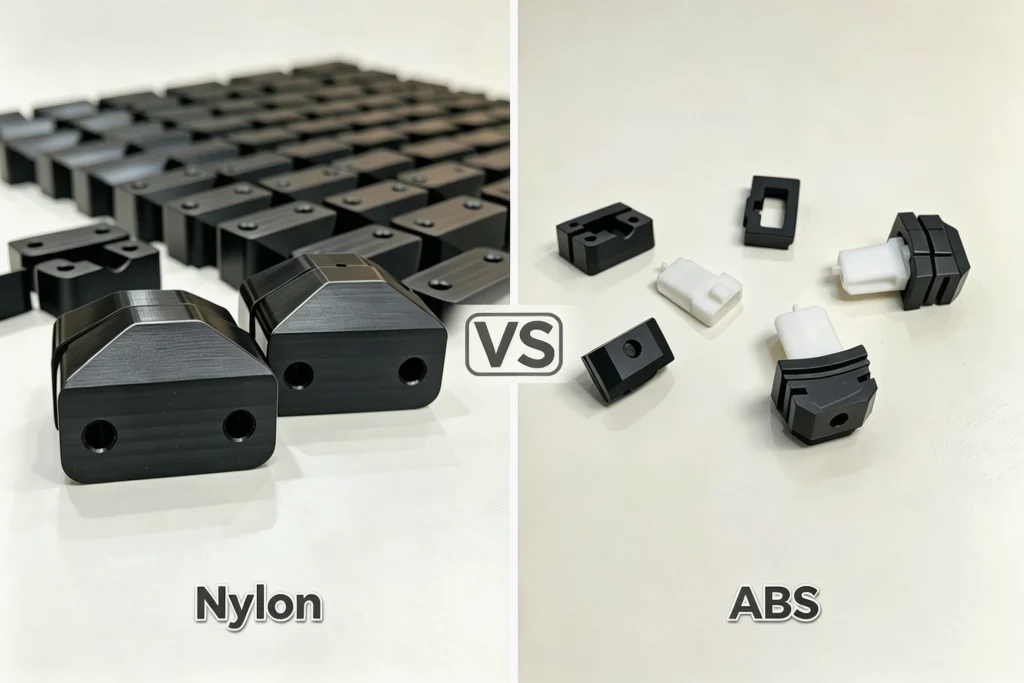
Choosing between nylon vs ABS is not simply a question of which plastic is “stronger.” The better choice depends on how the part will be loaded, whether it moves or flexes, the required tolerance, the manufacturing process, and the environment it will see in service.
In general, nylon is often a good fit for wear-resistant, impact-loaded, sliding, or repeatedly flexed parts. ABS is often a practical choice for rigid housings, covers, brackets, and prototypes that need stable dimensions and a good surface finish. However, nylon and ABS are both material families rather than single, universal materials. Grade, reinforcement, moisture condition, and process settings can all change actual performance.
Nylon vs ABS: Material Properties at a Glance
Nylon is a polyamide family that includes materials such as PA6, PA66, and PA12. It is widely used where toughness, wear resistance, and low friction matter. ABS is an engineering thermoplastic commonly used for housings, enclosures, consumer products, fixtures, and prototypes because it balances rigidity, impact resistance, appearance, and manufacturability.
| Consideration | Nylon | ABS |
| Strength and toughness | Often high toughness and good tensile strength; moisture and grade have a major effect | Good general-purpose strength and impact resistance |
| Stiffness and flexibility | Usually more flexible and resilient in unfilled grades; glass-filled grades are much stiffer | Generally more rigid for housings and stable structural shapes |
| Wear and friction | Often well suited to sliding, rolling, and moving interfaces | More suitable for static or low-wear components |
| Heat resistance | Grade-dependent; reinforced nylon can offer substantially higher heat performance | Many standard grades have a heat-deflection range of roughly 80–100°C under standard loads |
| Moisture and stability | PA6 and PA66 can absorb roughly 2.5–3.5% moisture at equilibrium under typical atmospheric conditions, affecting dimensions and stiffness | Low moisture absorption and generally more stable dimensions |
| Machining and finish | Machinable, but close features require moisture, fixturing, and inspection control | Often machines and finishes well for visible or cosmetic parts |
| Cost and sourcing | Varies substantially by nylon grade, fillers, and stock form | Often economical and widely available for general-purpose parts |
These figures are reference points rather than universal specifications. Material data should always be confirmed against the selected supplier grade and its test conditions. Heat-deflection temperature is also not the same as a guaranteed continuous operating temperature; actual service capability depends on load, exposure time, geometry, and the safety margin required.
The practical nylon vs ABS material decision is usually a tradeoff between functional durability in motion and rigidity with dimensional stability.

How Part Design and Geometry Affect Material Choice
Material selection should follow the part’s function and geometry. A part can fail because it wears, cracks, bends too much, loses thread engagement, or changes size after exposure to moisture—not simply because its tensile strength is too low.
Nylon can be useful when geometry includes flexible tabs, repeated snap-fits, sliding surfaces, or impact-prone features. Its resilience may help a clip survive repeated deflection, while its wear resistance can benefit a guide rail or moving contact surface.
ABS can be a better fit when the geometry requires a rigid shape with stable mating features. For example, an electronics enclosure with screw bosses, locating tabs, and a cosmetic outer surface may favor ABS. It is less affected by humidity than nylon, which helps when housing halves, covers, or interfaces must maintain a consistent fit. ABS properties can vary by grade and formulation, so the specified material grade should be confirmed before machining or production. ASTM D4673 provides a classification system for ABS materials and alloys.
Key design considerations include:
- Wall thickness: Avoid large changes in wall thickness, especially around ribs, bosses, and mounting areas. Uneven sections can create stress concentrations, warp risk, and inconsistent cooling in molded or printed parts.
- Ribs and gussets: Use ribs to increase stiffness instead of making all walls thicker. This can help a nylon bracket resist deflection or allow an ABS enclosure to remain rigid without excessive material use.
- Snap-fits: Nylon is often preferred for snap-fits that must be assembled and released repeatedly. ABS can work for lower-deflection clips, particularly in rigid housing designs.
- Threads and fasteners: Both materials can be machined with threads, but repeated assembly or high clamping force may require metal inserts. Nylon’s flexibility can reduce thread damage in some cases, while ABS may provide a more stable threaded feature in dry environments.
- Moving interfaces: Nylon is often more suitable for gears, bushings, rollers, and sliding guides because friction and wear resistance are important. ABS can work for low-load movement, but it is usually not the first choice for sustained sliding contact.
- Tight-fitting features: If a part includes alignment holes, bearing pockets, close-fitting covers, or precision locating features, dimensional stability becomes critical. ABS may be easier to manage, while nylon requires more attention to conditioning and service humidity.

Nylon vs ABS for CNC Machining
Both materials are available as CNC-machined plastic parts, but their behavior during machining and inspection differs.
ABS is often a practical material for machined housings, fixtures, brackets, covers, and prototype assemblies. It typically cuts cleanly, can achieve a good cosmetic surface, and is less affected by environmental moisture. For parts with moderate tolerances and stable mating features, ABS is often straightforward to machine and inspect.
Nylon is also commonly machined, particularly for functional mechanical parts. However, “nylon” can refer to several grades, including PA6, PA66, cast nylon, oil-filled nylon, and glass-filled nylon. These grades can differ in stiffness, wear resistance, toughness, and machining behavior.
For nylon vs ABS for machining, consider:
- Part deflection: Unfilled nylon is more compliant than ABS and may deflect during clamping or cutting, especially in thin-wall or long unsupported geometries. Good fixturing and staged machining reduce this risk.
- Moisture absorption: Nylon absorbs moisture from the air. This can affect part dimensions and stiffness before and after machining. Close-tolerance holes, slots, threads, and mating features should be designed and inspected with the material’s conditioning state in mind.
- Tight tolerances: ABS may be preferable for stable dry-environment dimensions. Nylon can still be used for tight functional features, but the drawing, inspection method, fit allowance, and expected humidity should be defined early.
- Threaded holes: For low-load or infrequently assembled parts, machined plastic threads may be sufficient. For serviceable assemblies, repeated fastening, or higher clamp loads, threaded inserts are usually more reliable.
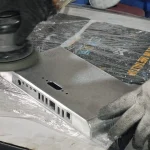
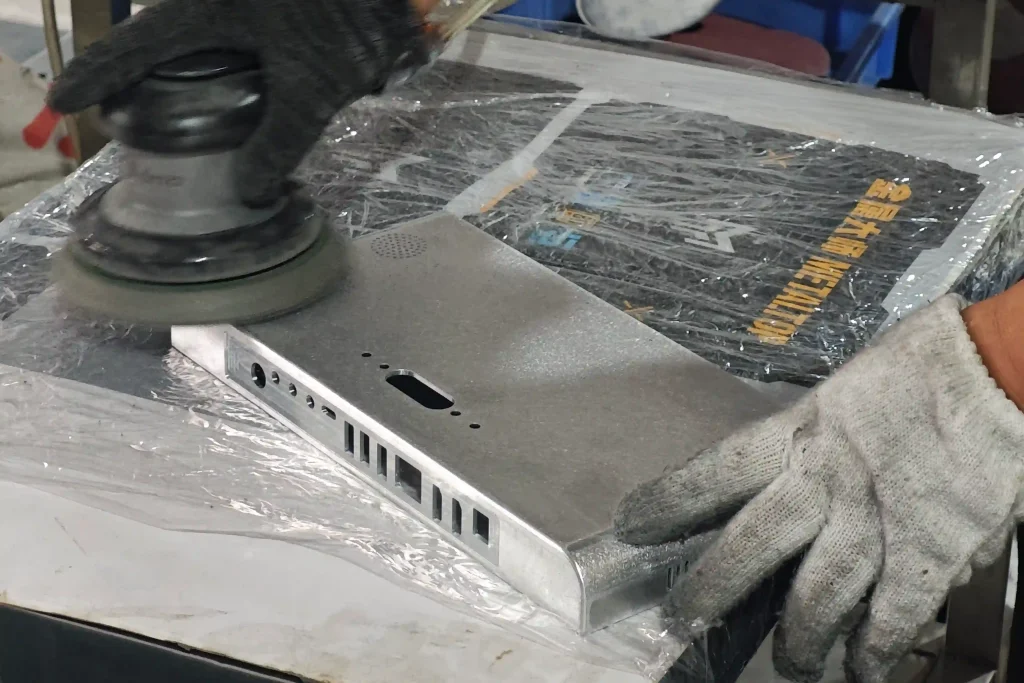
- Surface finish: ABS is often easier to sand, paint, bond, or finish cosmetically. Nylon is usually selected for functional rather than decorative surfaces, although the final result depends on grade and machining parameters.
The correct choice is not always the easiest material to machine. A nylon guide block may require more careful inspection but deliver better wear life than ABS. Conversely, an ABS electronics housing may provide better fit, finish, and dimensional consistency than nylon.

Nylon vs ABS for 3D Printing
For 3D printing, first distinguish between thermoplastic and resin-based processes. In FDM and SLS, ABS and nylon are generally real thermoplastics: ABS is commonly printed as filament, while nylon materials such as PA12 and PA11 are widely used in FDM and powder-bed processes.
In SLA, DLP, LCD, and similar photopolymer processes, the material is usually a UV-cured resin. “ABS-like” or “nylon-like” resins may approximate selected properties, but they are not equivalent to specific ABS, PA6, PA66, or PA12 grades. Critical mechanical, thermal, wear, and aging requirements should be verified against the supplier’s material data.
For thermoplastic 3D printing, choose nylon when the part needs toughness, flexibility, abrasion resistance, repeated movement, or impact resistance. It is often suitable for clips, cable guides, gears, hinges, and wear components. However, nylon must be kept dry before printing, since absorbed moisture can reduce surface quality and layer bonding.
Choose ABS when the part needs a rigid shape, stable mating features, cosmetic finishing, or housing-like appearance. It is commonly used for functional prototypes, enclosures, covers, and fit-check assemblies.
Printed performance remains process-dependent. Material grade, print orientation, wall thickness, layer bonding, infill, machine capability, and post-processing can all affect the finished part. A nylon prototype may better represent a working latch or wear component, while an ABS prototype may be more useful for evaluating enclosure fit, assembly clearance, and external appearance.

Nylon-Like vs ABS-Like Materials for Vacuum Casting
Vacuum casting is typically used for prototype replication and low-volume production when a project needs multiple parts with consistent appearance but does not yet justify injection-molding tooling. It is often practical for small batches in the tens of parts. A silicone mold may commonly support around 20 castings, although actual mold life depends on the resin, part geometry, undercuts, demolding stress, and cosmetic requirements.
Vacuum casting also changes the nylon vs ABS decision because the finished parts are usually polyurethane-based casting resins rather than the same thermoplastic nylon or ABS used in CNC machining, injection molding, FDM, or SLS. “ABS-like” and “nylon-like” describe the intended performance profile of a casting resin, not an exact material equivalent.
ABS-like casting resins are commonly selected for rigid housings, covers, enclosures, appearance models, and functional prototypes. They can provide a useful balance of rigidity, impact resistance, dimensional stability, color consistency, and surface quality. They are often a practical choice when a small batch needs an injection-molded-like appearance for design reviews, customer samples, or pre-production validation.
Nylon-like casting resins may be more suitable when the prototype prioritizes toughness, abrasion resistance, resilience, chemical exposure, or mechanical loading. Some nylon-like and glass-filled nylon-like formulations are designed for higher stiffness or improved heat performance. However, their wear behavior, fatigue life, moisture response, and long-term performance should not be assumed to match a specific PA6, PA66, or PA12 grade.
| Manufacturing Process | Typical Material Form | Best Fit | Key Material-Selection Consideration |
| CNC machining | Real ABS or nylon stock, such as ABS, PA6, PA66, PA12, cast nylon, or filled nylon | Functional prototypes, tight or critical features, fixtures, and low-volume mechanical parts | Nylon requires attention to moisture condition and potential dimensional change; ABS is often easier to control for stable cosmetic and mating features |
| 3D printing | Real thermoplastics in FDM or SLS, or photopolymer resins in SLA/DLP | Rapid one-off prototypes, design iterations, complex geometries, and early fit checks | FDM/SLS nylon and ABS are real thermoplastics; “ABS-like” or “nylon-like” SLA resins should not be treated as equivalent to the actual materials |
| Vacuum casting | Usually polyurethane-based ABS-like or nylon-like casting resins | Small batches of prototypes, appearance models, pre-production samples, and parts requiring consistent color or surface quality | The resin’s “ABS-like” or “nylon-like” label indicates a performance direction only; validate the specific resin for heat, wear, chemical, and long-term requirements |
Nylon vs ABS by Application
The best material depends on what the component must resist during use.
| Application | Recommended Direction | Why |
| Gears, bushings, rollers, guides | Often nylon | Better wear resistance and lower friction can improve performance in moving interfaces |
| Sliding or repeatedly flexed components | Often nylon | Toughness and resilience can support motion, impact, and repeated deflection |
| Housings, covers, and enclosures | Often ABS | Rigidity, stable dimensions, and easier cosmetic finishing are usually valuable |
| Brackets and fixtures | Either | ABS suits rigid and stable geometry; nylon may be better where vibration, impact, or flexing occurs |
| Snap-fits | Often nylon for repeated use | Nylon may tolerate repeated deflection better; ABS can suit lower-deflection clips |
| Functional prototypes | Depends on the test | Nylon is better for movement and wear testing; ABS is useful for fit, form, appearance, and rigid assemblies |
For example, a machine guard with a rigid outer panel may favor ABS. If that guard includes a flexible retention clip or a sliding contact pad, nylon may be the better material for those individual features. Using different plastics for different functions can be more effective than forcing one material to serve every requirement.
Nylon vs ABS: Cost, Tolerance, and Production Considerations
Nylon vs ABS cost should be evaluated as total part cost, not only raw material price. The final cost can include stock availability, material grade, CNC machining time, fixture complexity, print yield, post-processing, inspection, rework, scrap risk, and production volume.
ABS is often economical for general-purpose parts because it is widely available, relatively easy to finish, and stable in typical dry indoor conditions. Nylon can cost more depending on the grade, reinforcement, or stock type, but it may reduce lifecycle cost when wear resistance or durability prevents early failure.
Tolerance requirements can change the decision significantly. Tight tolerances require more than choosing a high-strength plastic. They depend on:
- Part geometry and wall thickness
- Machining strategy and fixture design
- Material condition during inspection
- Temperature and humidity in service
- The importance of each critical feature
- Assembly clearance and fit requirements
For nylon, moisture absorption deserves special attention. As nylon gains or loses moisture, it can change dimension and stiffness. That does not make nylon unsuitable for precision parts, but it means designers should specify realistic tolerances, identify critical dimensions, and consider conditioning before inspection and assembly.
Which Material Should You Choose?
Choose nylon when the part prioritizes:
- Wear resistance for sliding or rotating surfaces
- Toughness under impact or repeated loading
- Low friction
- Repeated flexing or resilient snap-fit behavior
- Mechanical performance in gears, bushings, rollers, guides, and moving parts
- Resistance to oils or chemicals relevant to the operating environment
Choose ABS when the part prioritizes:
- Rigidity and shape retention
- Dimensional stability in normal dry environments
- Cosmetic finish or post-processing
- Housings, covers, enclosures, and rigid brackets
- Stable mating features and assembly fit
- A practical general-purpose material for prototypes and low-volume parts
The final choice should combine part function, operating environment, geometry, manufacturing process, tolerance requirements, production volume, and total cost. For prototypes and low- to mid-volume production parts, FastPreci can help evaluate material options, design features, tolerance risk, and the most suitable manufacturing process before production begins.
Frequently Asked Questions
Is nylon stronger than ABS?
For common unfilled grades tested in dry conditions, PA6 or PA66 often has higher tensile strength than general-purpose ABS—for example, approximately 70–85 MPa versus about 40–55 MPa. But strength is only one measure: moisture-conditioned nylon can lose stiffness and tensile strength while gaining ductility and impact resilience.
Is nylon or ABS better for mechanical parts?
Nylon is often better for mechanical parts with movement, friction, impact, wear, or repeated flexing, such as gears, bushings, rollers, and guides. ABS is often better for rigid mechanical housings, brackets, covers, and fixtures. The part’s specific failure risk should determine the choice.
Is nylon or ABS better for CNC machining?
Both can be CNC machined effectively. ABS is often easier to manage for cosmetic surfaces and stable dimensions. Nylon is valuable for wear-resistant or moving components but may need more attention to moisture absorption, fixturing, and inspection when close tolerances are required.
Is nylon or ABS better for 3D printing?
ABS is commonly chosen for rigid functional prototypes and parts that need easier post-processing, while nylon is often selected for tougher, more flexible, or wear-resistant components. ABS generally requires careful control of cooling and warping, while nylon is particularly sensitive to moisture and may require drying before printing.
What colors are commonly available for ABS and nylon?
Color availability depends on the material and manufacturing process. For CNC machining, ABS is commonly black, white, natural, gray, blue, or red, while nylon is typically natural/off-white or black, with some grades available in blue or gray. 3D-printed ABS offers the widest color range, while nylon is commonly natural, white, gray, or black. Vacuum-cast parts can usually be matched to custom colors.