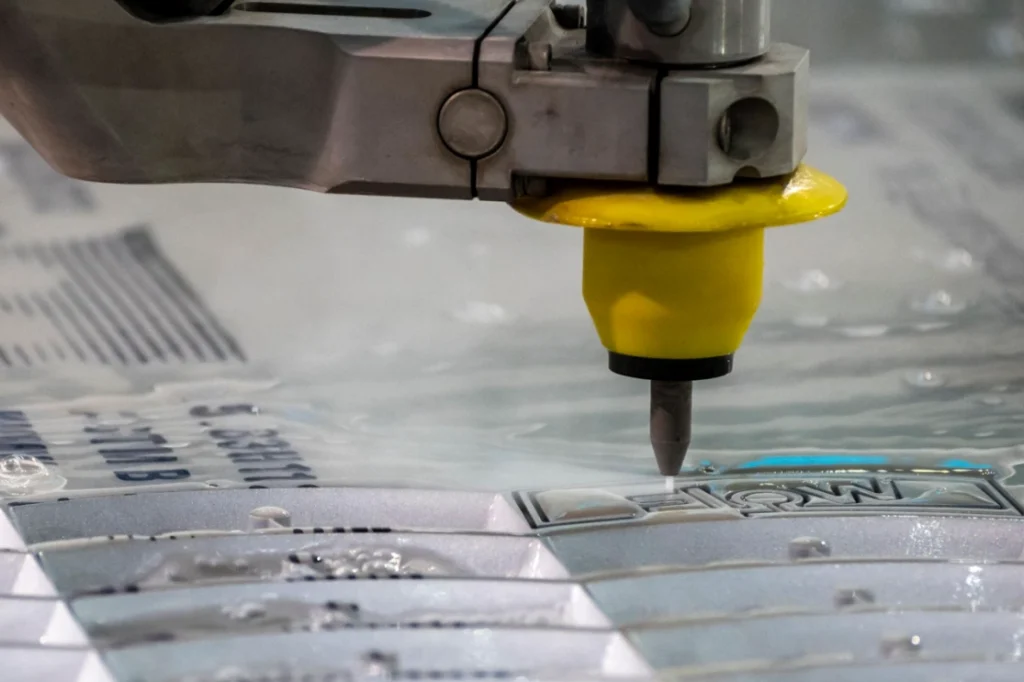
Waterjet cutting removes material with a high-pressure water stream, adding abrasive when necessary to cut harder workpieces. It produces through-cut profiles without the substantial heat-affected zone associated with thermal cutting. For engineering buyers, the central question is whether the resulting edges and features meet finished-part requirements or need further machining.
What Is Waterjet Cutting?
 How Waterjet Cutting Works
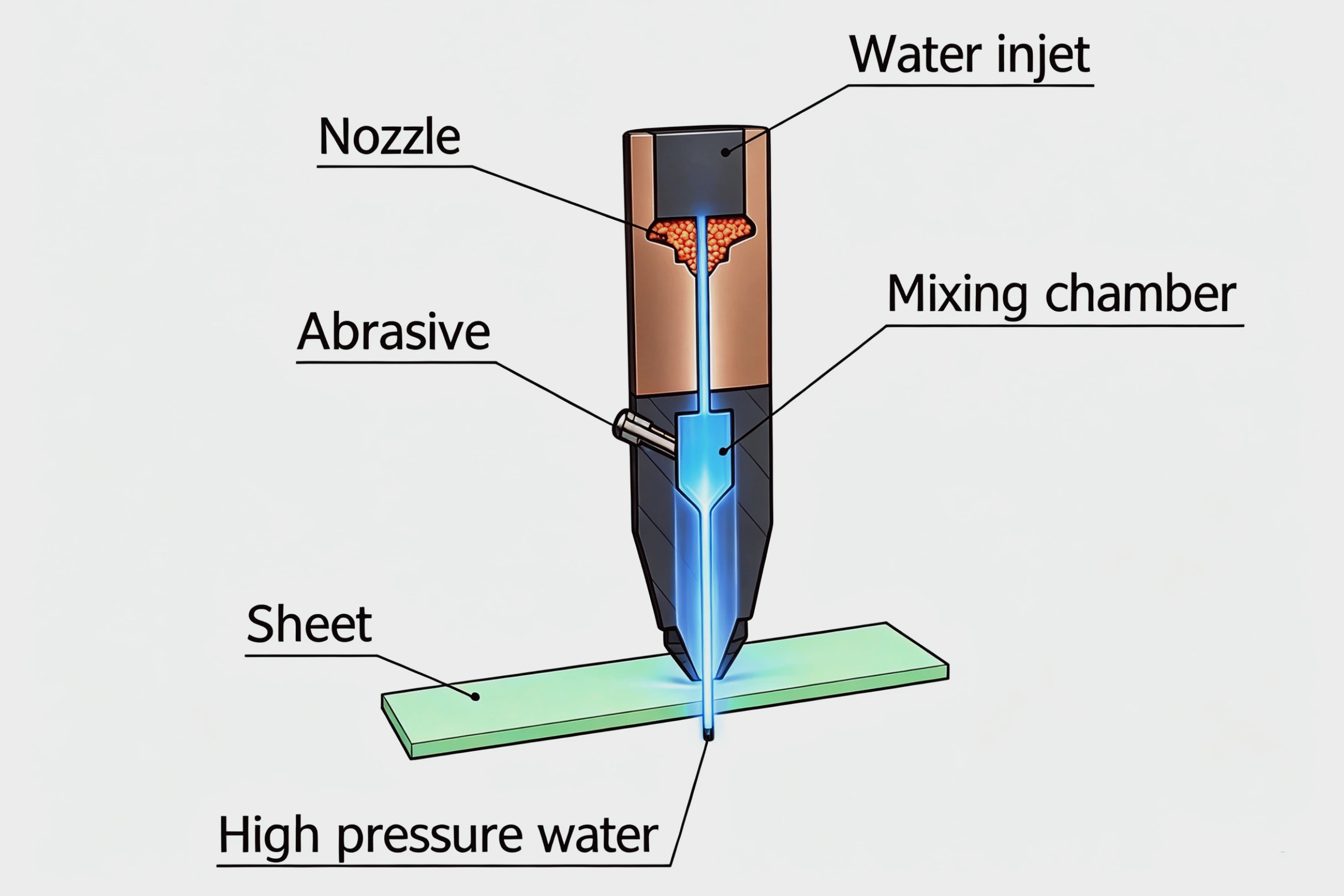
A pump pressurizes water, which passes through a small orifice to form a high-velocity jet. In abrasive systems, particles such as garnet enter the stream and help cut harder materials. The cutting head follows a programmed path, while feed rate, abrasive flow, nozzle condition, and cutting settings influence kerf width, taper, and edge quality.
Pure Waterjet vs. Abrasive Waterjet Cutting
Pure waterjet cutting uses water alone for selected soft materials, including rubber and foam. Abrasive waterjet cutting adds particles for metals, stone, ceramics, and other harder materials. Before selecting a process, check the material grade, thickness, and required edge quality. A material being technically cuttable does not guarantee that the finished edge will meet the drawing.
CNC Waterjet Cutting and Modern Waterjet Systems
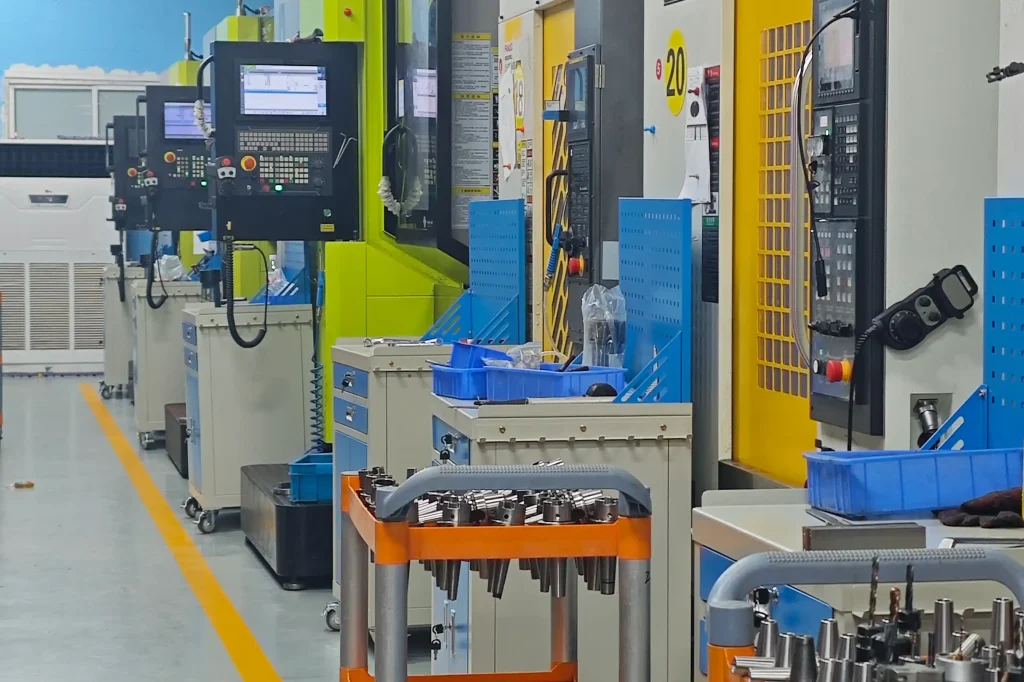
Modern industrial systems commonly use CNC controls to follow programmed paths. “Waterjet” identifies the cutting method; “CNC” identifies motion control. Some systems add articulated heads for bevels or taper compensation, but these capabilities are machine-specific.
What Materials Can Waterjet Cutting Cut?
Metals: Aluminum, Stainless Steel and Titanium
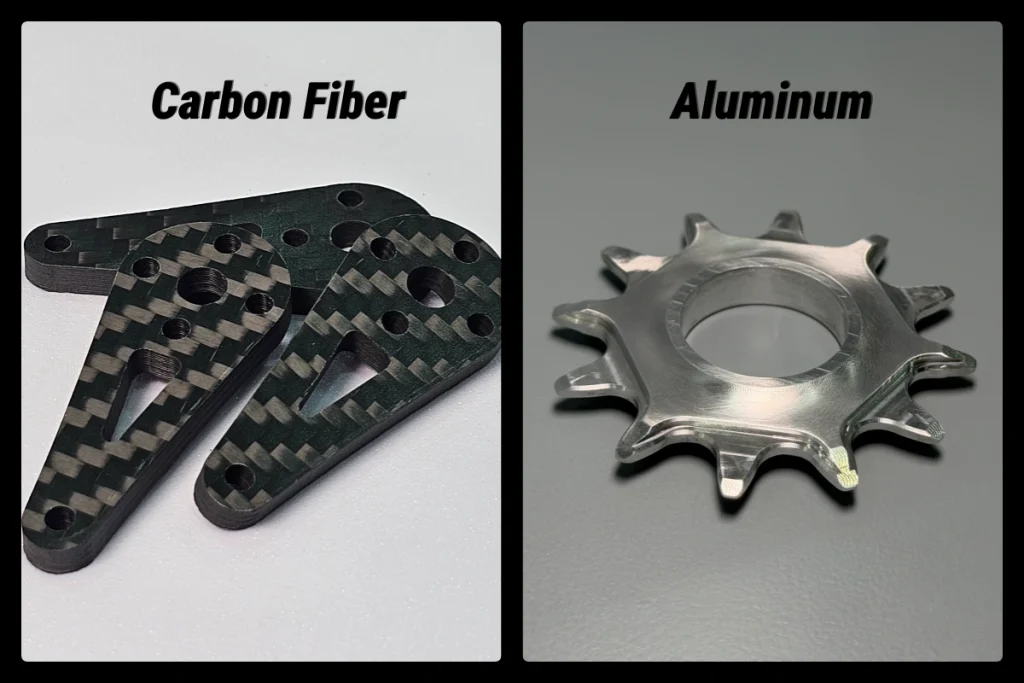
Abrasive waterjet cutting suits aluminum, stainless steel, titanium, and many other alloys. Avoiding thermal alteration is valuable when subsequent processing or service requirements make heat-affected edges undesirable. However, increasing thickness or demanding finer edges generally reduces cutting speed and raises cost.
Plastics, Rubber and Foam
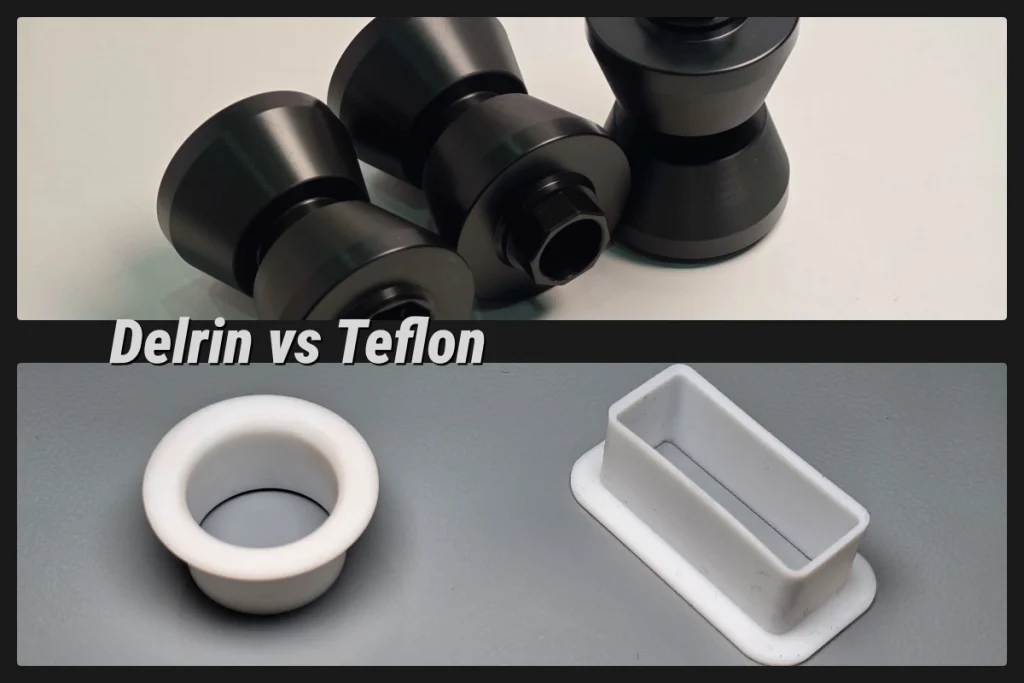
Pure waterjet cutting is commonly used for rubber, foam, and selected plastics. Abrasive waterjet cutting is widely used for metals and other hard materials. For rigid or brittle plastics, confirm the cutting method with the supplier based on the polymer, thickness, edge-quality requirements, and risk of cracking or surface damage.
Glass, Ceramics and Composite Materials
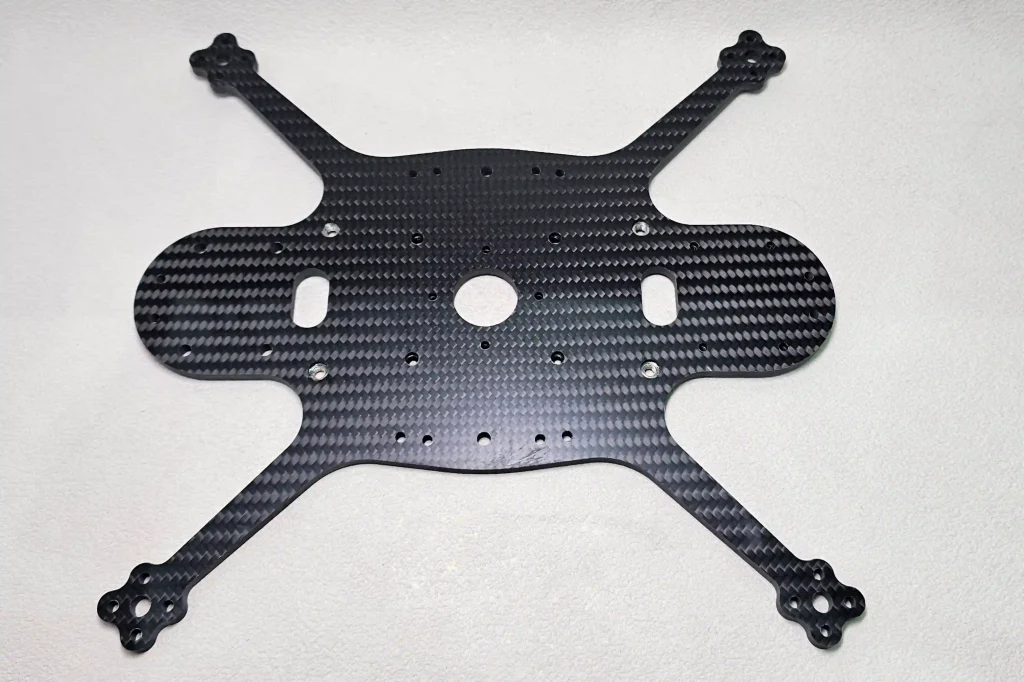
For carbon-fiber laminates, qualify the piercing strategy and cutting parameters on the actual layup and thickness, because jet impact can cause delamination. For glass and ceramics, confirm whether the specific material can be cut safely; fully tempered glass generally cannot be cut after tempering. Trial cuts may be necessary when edge damage or dimensional integrity is critical.
Advantages and Limitations of Waterjet Cutting
No Significant Heat-Affected Zone
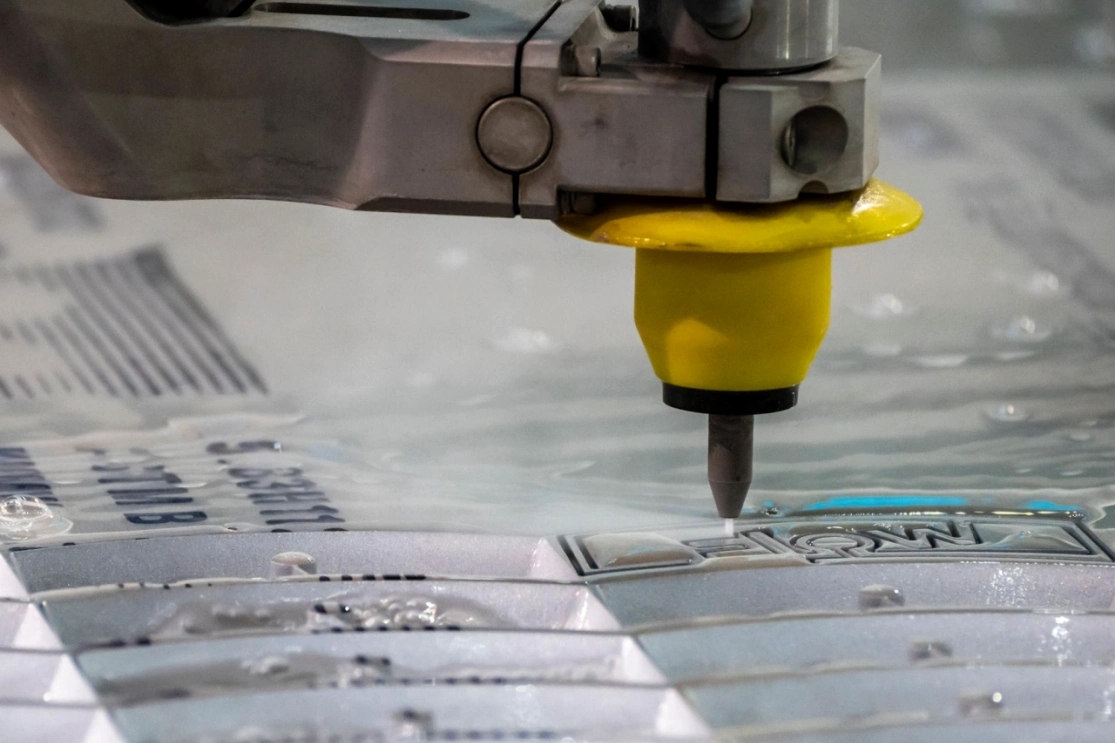
Waterjet is a nonthermal cutting process, so it avoids the heat-affected zone associated with laser or plasma cutting. However, it does not eliminate mechanical damage, composite delamination, or distortion caused by the release of residual stresses.
Material Thickness, Kerf Width and Cutting Taper
Kerf width is the width of material removed. Taper is the difference in cut-wall position through the thickness. Thick sections challenge jet penetration and dimensional consistency; speed, pressure, abrasive delivery, nozzle wear, and compensation settings influence the result.
Edge Quality, Surface Finish and Cutting Speed
Faster cutting generally produces more pronounced striations and less consistent exit-side geometry. Slower quality settings improve edges but increase machine time. Specify higher quality only where useful; waterjet does not inherently produce a smoother finish than a properly selected laser process.
Waterjet Cutting vs. Laser Cutting vs. CNC Machining
Waterjet vs. Laser Cutting
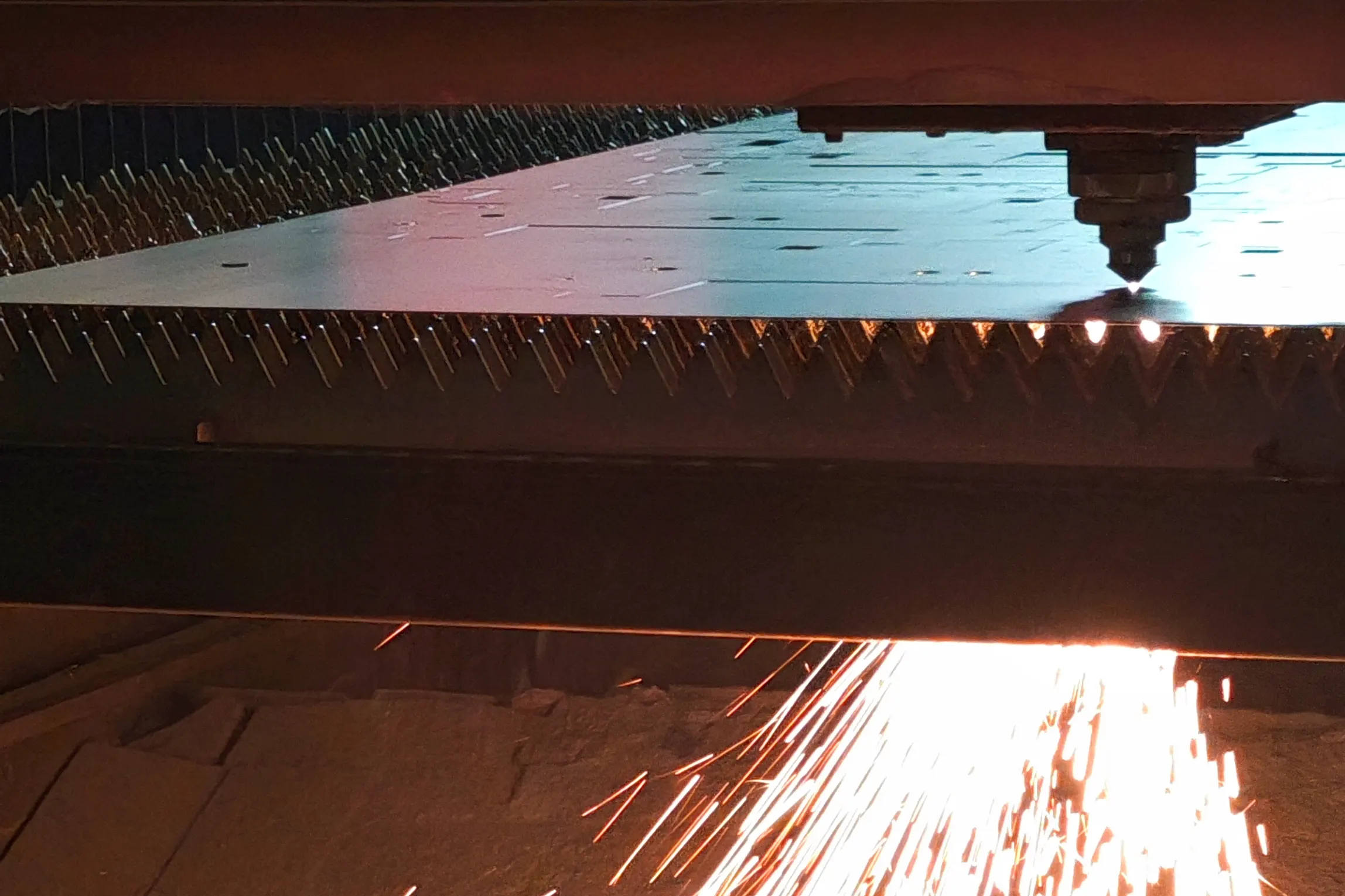
Laser cutting is often competitive for thin-sheet production because of its cutting speed and fine detail. Waterjet merits consideration for selected thick, heat-sensitive, or nonmetallic workpieces. Reflectivity is not an automatic reason to reject lasers: suitable fiber-laser systems cut aluminum, copper, and brass. Compare actual thickness capability, edge requirements, assist-gas consumption, and finishing costs.
Waterjet vs. CNC Milling
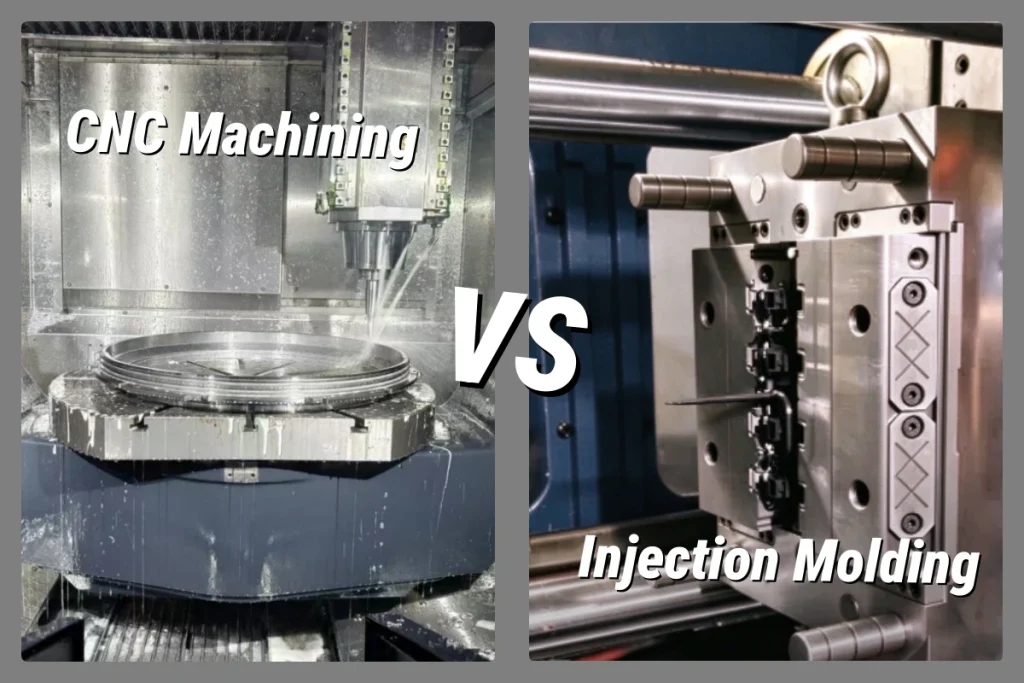
Waterjet primarily makes profiles and through-cut openings. CNC milling produces pockets, steps, precision mating surfaces, and three-dimensional features; associated drilling and tapping create finished holes and threads. A waterjet blank can reduce milling stock removal, but another setup is worthwhile only if those savings exceed handling and finishing costs.
Waterjet Cutting vs. Wire EDM
Wire EDM uses electrical discharges to remove conductive material; waterjet does not require conductivity. Wire EDM often suits precision tooling and narrow, intricate profiles, while waterjet can prepare blanks faster when broader tolerances are acceptable. Unlike waterjet, wire EDM removes material through localized melting and vaporization. Its processing time and cost depend on workpiece thickness, wire access, flushing conditions, and the number of finishing passes.
Cost Comparison
For repeated thin-metal profiles that need no precision finishing, laser often has a cost advantage. For short-run plate blanks requiring limited finishing, waterjet may avoid extensive milling. For pocket-heavy components, direct CNC machining may eliminate an unnecessary intermediate operation.
| Criterion | Waterjet | Laser | CNC milling | Wire EDM |
| Typical applications | Plate profiles, blanks | Sheet profiles | Finished prismatic parts | Dies, precision profiles |
| Material compatibility | Selected metals and nonmetals | Laser- and material-specific | Machinable metals and plastics | Electrically conductive materials only |
| Thermal effects | No substantial cutting HAZ | Thermal cutting zone | Heat generated at the cutting zone; no thermal cutting HAZ | Localized thermal erosion |
| Geometry and features | Through-cuts; optional bevels | Through-cuts, fine detail | Pockets, steps, bores, 3D surfaces | Through-profiles, narrow slots, tapers |
| Accuracy considerations | Taper, lag, thickness | Heat, thickness, feature size | Tool access, deflection, workholding | Wire offset, flushing, finishing passes |
| Main cost drivers | Cut time, abrasive, piercing | Cut time, gas, power | Setup, tooling, removal volume | Cut time, wire, passes |
Waterjet Cutting Accuracy, Tolerances and Cost
What Tolerances Can Waterjet Cutting Achieve?
Waterjet cutting tolerances vary by machine, material, thickness, cutting speed, and edge-quality setting. OMAX cites approximately ±0.003 in (±0.076 mm) as an achievable tolerance under suitable conditions, but this should be treated as a machine-specific reference rather than a universal shop tolerance. For critical dimensions, confirm the supplier’s capability on the actual material and thickness, including dimensional variation through the cut.
What Affects Waterjet Cutting Cost?
Waterjet cutting costs depend on material type and thickness, total cut length, the number of piercings, geometry-related slowdowns, required edge quality, abrasive consumption, order quantity, setup, and any secondary machining. Abrasive consumption is a significant operating cost, while tighter edge-quality requirements can increase cutting time. A lower machine-hour rate does not necessarily mean a lower cost per finished part.
To obtain an accurate quote, provide a CAD file or dimensioned drawing, material grade, stock thickness, quantity, critical tolerances, and required edge quality. Specify any holes, mating surfaces, or other features that need secondary machining, along with relevant datums or assembly requirements.
When Is Waterjet Cutting the Most Cost-Effective Option?
Consider a thick aluminum plate with a simple outer profile, several precision mounting holes, and one flat mating face. Waterjet cutting can produce a near-net blank without milling away the full plate profile. CNC milling can then finish the mounting holes and mating face to the required dimensions. By contrast, if the part contains deep pockets, multiple precision bores, and several machined faces, compare direct CNC machining against the combined cutting-and-machining route before choosing waterjet blanking.
Secondary Machining After Waterjet Cutting
CNC Milling for Precision Holes, Pockets and Flat Surfaces
Mill, drill, tap, or bore features that the as-cut blank cannot satisfy. Establish machining datums and workholding before blanking; leave enough stock to clean up taper and edge irregularities. Avoid locating precision features solely from an unfinished tapered edge.

Wire EDM for Tight-Tolerance Profiles and Intricate Features
Wire EDM may finish selected conductive blanks requiring precise profiles or narrow features. Preserve sufficient finishing stock and plan wire entry access.
Drilling, Reaming, Deburring and Edge Finishing
Use secondary operations only where the drawing requires them. Drill or bore holes that need tighter dimensional control, better roundness, or more consistent geometry than waterjet cutting can provide. Reaming can bring a properly prepared hole to a more precise diameter, but it does not correct every positional error or severe taper. Deburring and edge breaking remove sharp edges and improve handling safety; specify a chamfer or edge-break requirement when the part needs a defined edge condition.
Design Considerations for Waterjet-Cut Parts
Kerf Width, Minimum Features and Corner Radii
Provide nominal geometry and let the supplier apply kerf compensation. Confirm narrow webs, small openings, and internal radii against the actual nozzle and material. Place lead-ins and piercing points in scrap where possible to protect functional edges.
Hole Size, Taper and Edge Quality Requirements
A cut-through hole is not necessarily cylindrical. Taper and jet lag become more consequential in thick material or aggressive cutting conditions. Machine holes when size, roundness, perpendicularity, or fit is functional; identify acceptable as-cut openings separately.
Tolerance Allocation and Machining Allowance
Apply tight tolerances to functional dimensions, not every perimeter segment. Agree on finishing allowance, datum strategy, and inspection criteria before cutting. Too little stock prevents complete cleanup; excessive allowance sacrifices the material and machining-time benefits of near-net blanking.
Conclusion
The right manufacturing route is the one that meets finished-part requirements with the least unnecessary work. Waterjet cutting may simplify blank preparation, while CNC machining delivers the precision features and surfaces that cutting alone cannot.
Frequently Asked Questions
Is waterjet cutting more accurate than laser cutting?
No. Laser cutting is often a strong choice for fine details in thin sheet, while waterjet avoids thermal cutting effects and can suit thicker or heat-sensitive materials. For precision holes or mating features, verify finished-feature tolerances with the supplier and plan secondary machining where necessary.
Is waterjet cutting cheaper than CNC machining?
It can be cheaper for flat profiles that need little finishing. CNC machining may be more economical when pockets, precision bores, and machined surfaces dominate. Compare complete routes, including blank preparation, setups, material utilization, and inspection.
Can waterjet cutting cut thick metal?
Yes, suitably equipped abrasive systems cut thick metal. Practical feasibility depends on material, thickness, penetration capability, acceptable taper, cutting time, and inspection requirements.
Does waterjet cutting leave burrs or tapered edges?
It can leave taper, striations, and exit-edge irregularities. Slower settings and compensation can improve results, but edge breaking or finishing may remain necessary.
Can waterjet-cut parts be machined afterward?
Yes. Waterjet blanks can undergo milling, drilling, reaming, tapping, or, for conductive materials, wire EDM. Plan finishing stock and datum surfaces before cutting so subsequent operations can reliably achieve the required dimensions and surface condition.