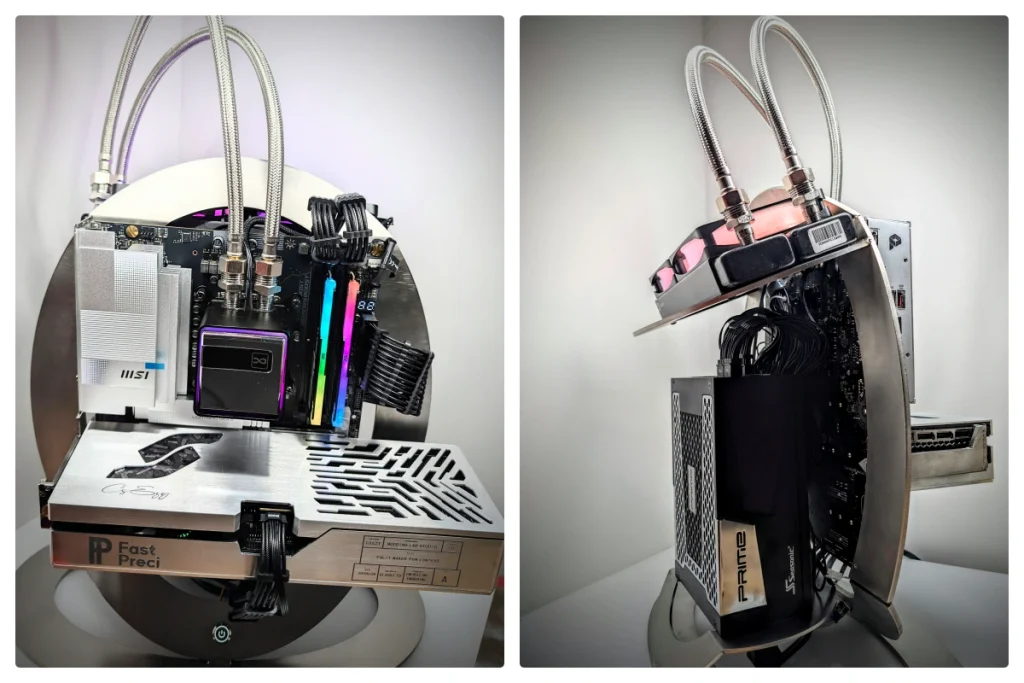
How DFM helped balance design intent, machinability, and assembly in a custom GPU cover and backplate project.
Project Overview
A custom PC build can be more than a collection of high-performance components. For enthusiasts who value industrial design and craftsmanship, even a graphics card can become a personalized design feature.
As a participant in the Palit Maker Program by Palit Microsystems, Julien, a French custom PC enthusiast known online as EZY, set out to create a distinctive GPU cover and matching backplate.
The design combined custom geometry, brushed aluminum, and engraved details to give the graphics card a unique appearance while maintaining its attachment and assembly functions.
FastPreci supported the project from DFM review through CNC machining, surface finishing, and final delivery. Before production, our engineering team reviewed the design and discussed practical adjustments with Julien, focusing on thin-wall machining risks, functional undercuts, engraving geometry, and local wall transitions.
Project specifications
| Item | Details |
| Application | Custom GPU cover and matching backplate |
| Quantity | One set: one cover and one backplate |
| Material | Aluminum 6061 |
| Manufacturing process | CNC milling |
| Surface finishing | Brushed finish, engraving, and black paint fill |
| General tolerance requirement | ISO 2768-m |
| Surface roughness requirement | Ra 3.2 μm |
| Project stage | Prototype |
| Delivery time | 12 working days from final design confirmation to delivery |
The Design Challenge
The custom aluminum cover and backplate were intended to showcase the graphics card within a larger PC build. Their distinctive appearance had to be preserved while accounting for several manufacturing constraints.
- Appearance and engraved details: Maintain the distinctive geometry, brushed surface, and intricate laser-engraved artwork.
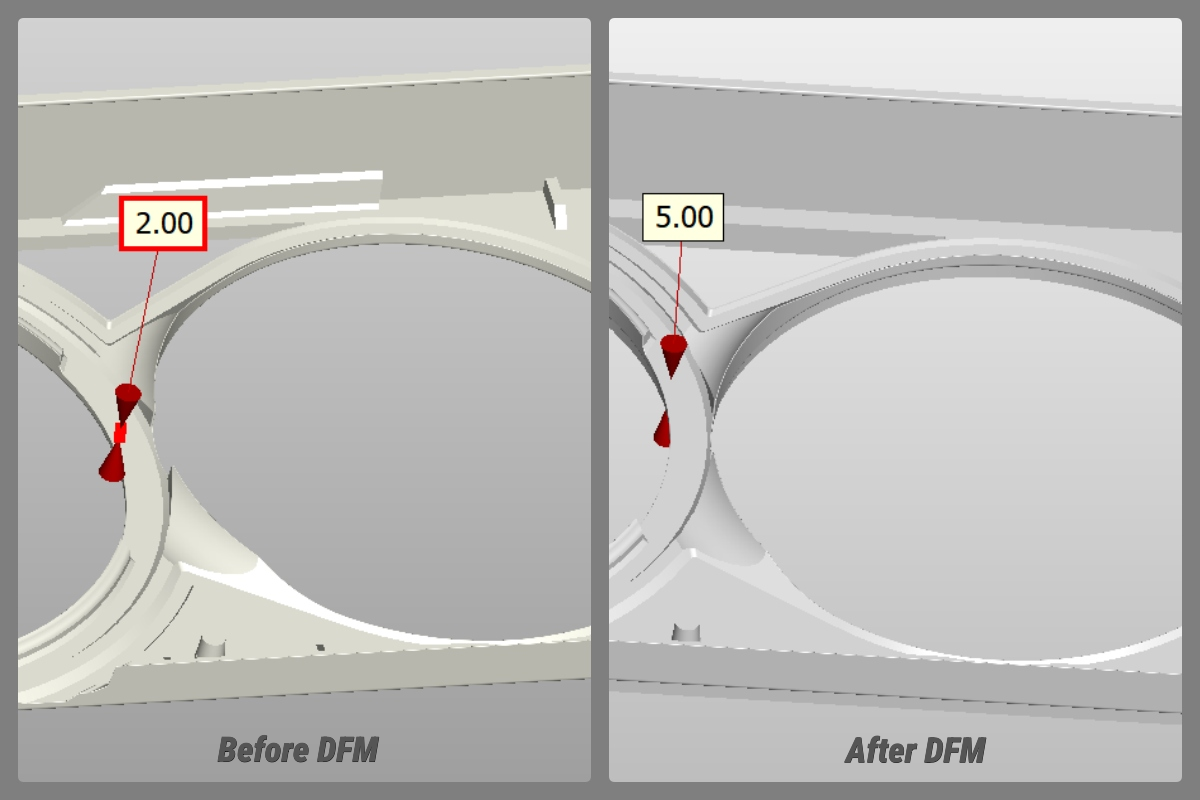
- Thin-wall machining risks: Some areas had 2 mm walls despite requiring substantial material removal, making stiffness and deformation important considerations during machining.
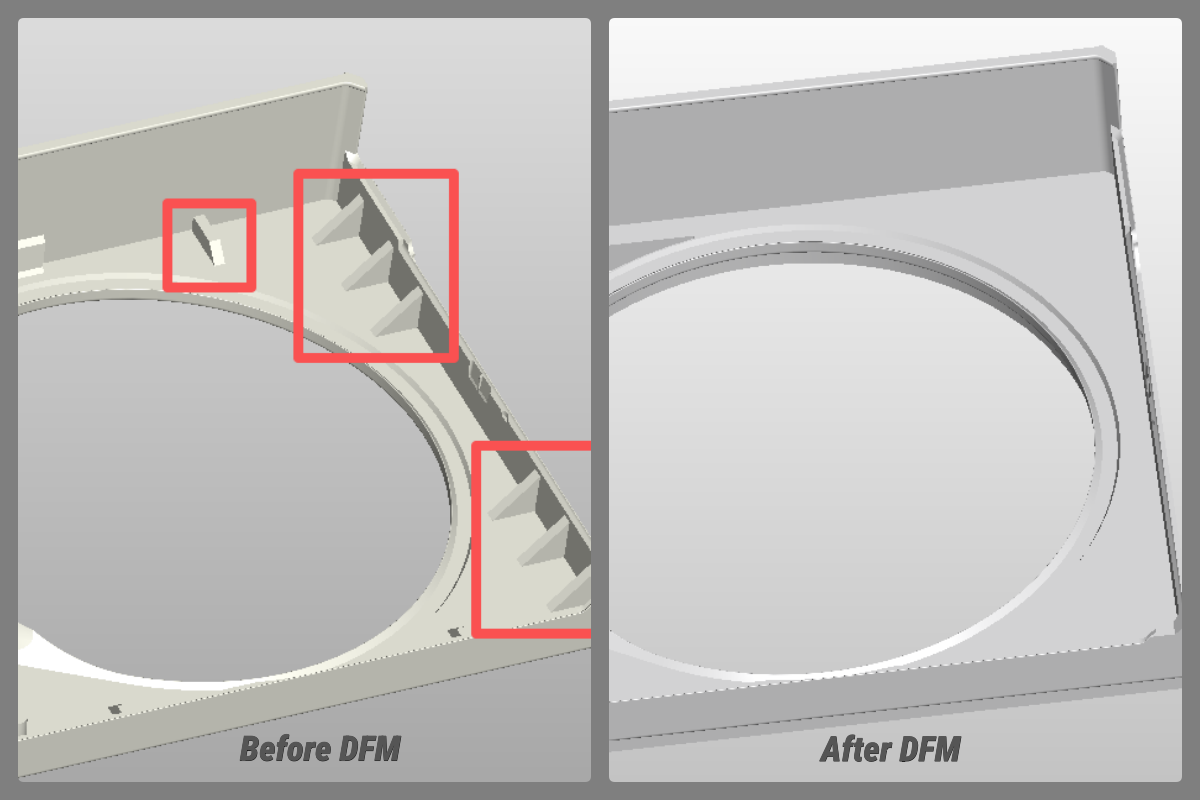
- Functional undercuts: Undercut features were necessary for clipping onto and holding the graphics card. Their geometry also limited tool access and required careful machining planning.
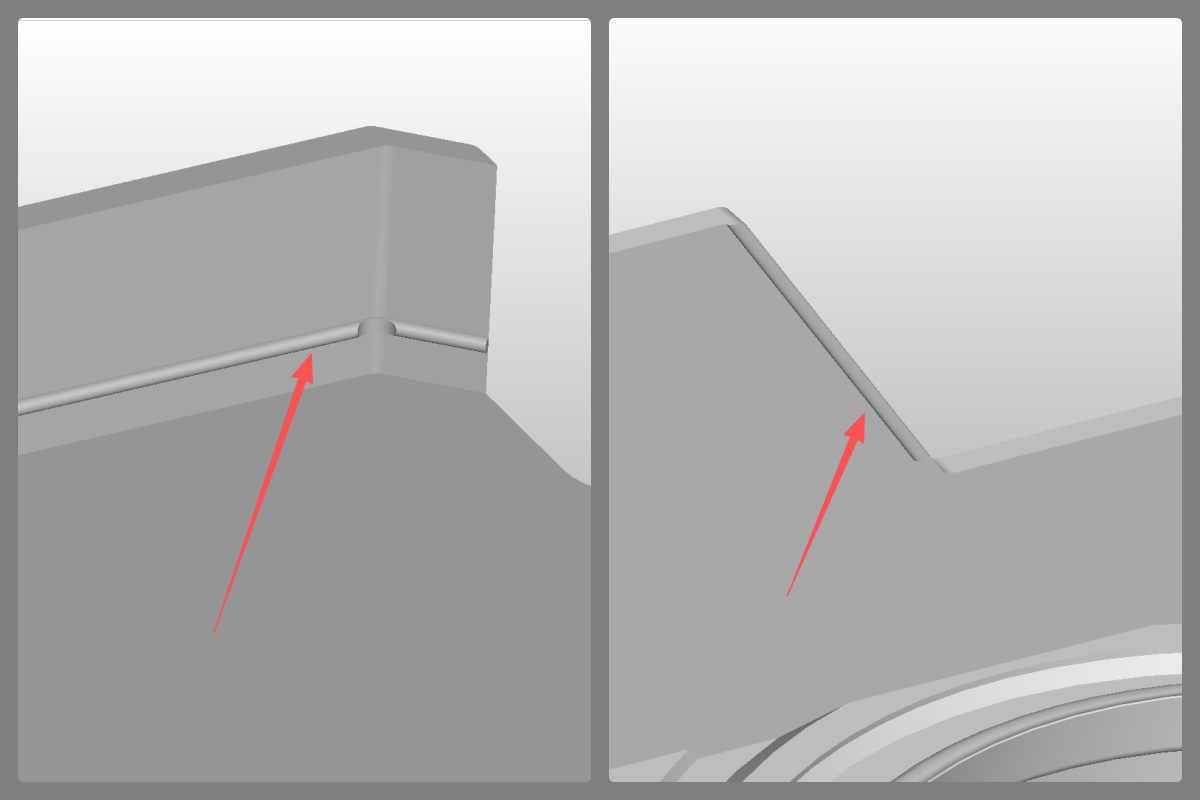
- Wall transitions and root radii: Selected areas required assessment for manufacturability and stress concentration.
Four DFM Decisions Before Machining
Balancing appearance, assembly, and machinability required careful trade-offs. FastPreci’s engineering team reviewed the design and worked with Julien to identify changes that could reduce manufacturing risk while preserving key visual and assembly features.
The review led to four decisions:
1. Increasing Wall Thickness Where Needed
The GPU cover had 2 mm-thick walls in areas requiring substantial material removal. FastPreci recommended increasing the thickness to 5 mm only where needed to reduce machining risk while preserving the intended appearance. The design was updated accordingly.
Design takeaway: Local wall-thickness adjustments can reduce machining risks without altering the overall design.
2. Retaining Functional Undercuts
FastPreci recommended replacing undercuts with vertical walls where possible to simplify machining. Julien explained that some undercuts were essential for attaching the backplate to the graphics card.
After reviewing a 3D assembly model, both sides agreed to remove unnecessary undercuts while retaining those required for assembly.
Design takeaway: Understand the function of complex features before removing them during DFM.
3. Refining Wall Transitions
FastPreci recommended changing selected areas to vertical walls and adding R3 fillets at the roots to help reduce stress concentration. These changes were approved before machining.
Design takeaway: Appropriate wall transitions and fillets can help address local stress concentration and machining constraints.
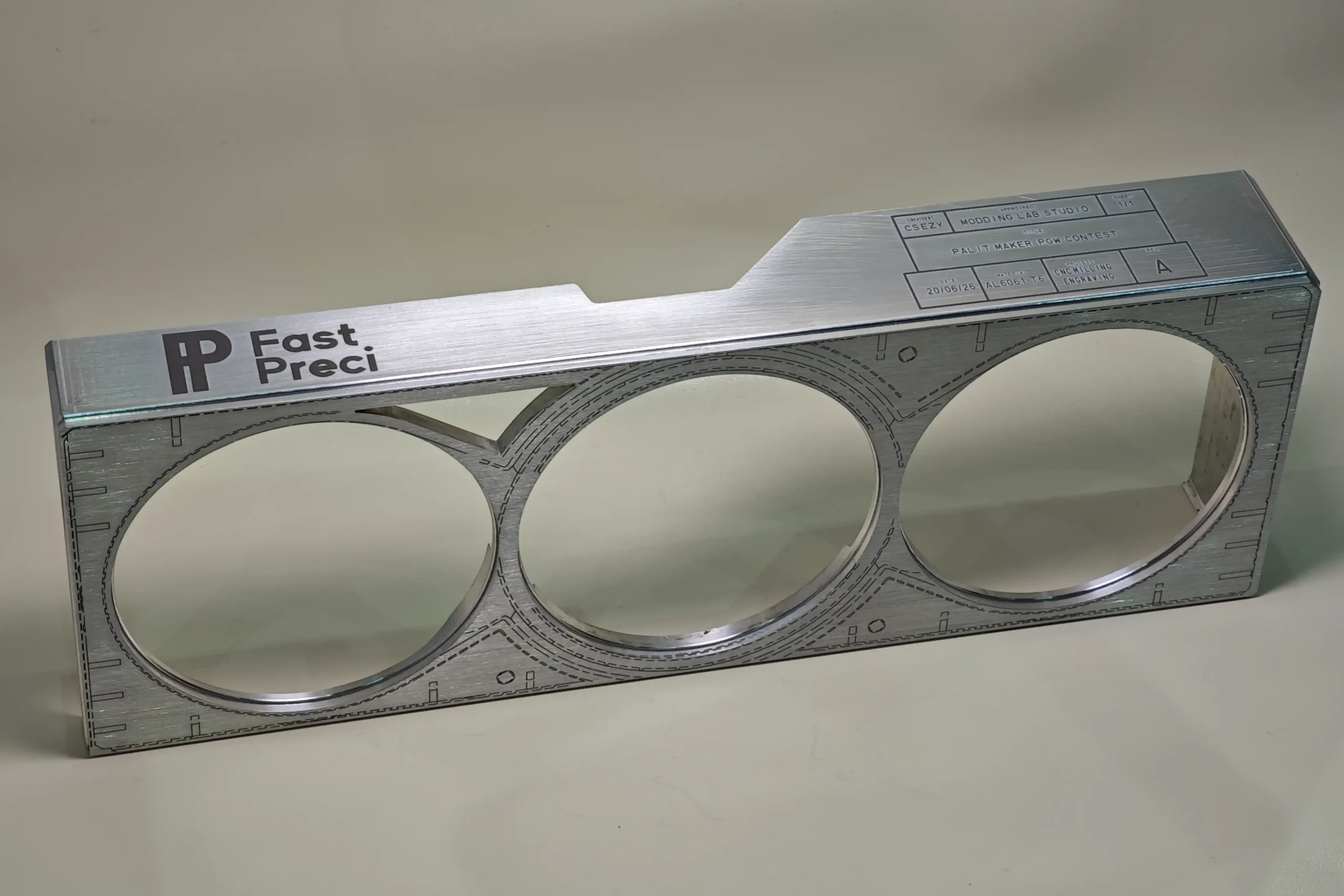
4. Switching to Recessed Engraving
The intended finish called for approximately 0.2 mm-deep engraving with black paint fill to contrast with the brushed aluminum. During DFM review, FastPreci recommended recessed rather than raised text to better match this requirement. The change was approved before production.
Design takeaway: Engraving geometry should be reviewed alongside the intended surface finish to ensure a cohesive final appearance.
FastPreci’s Manufacturing Solution
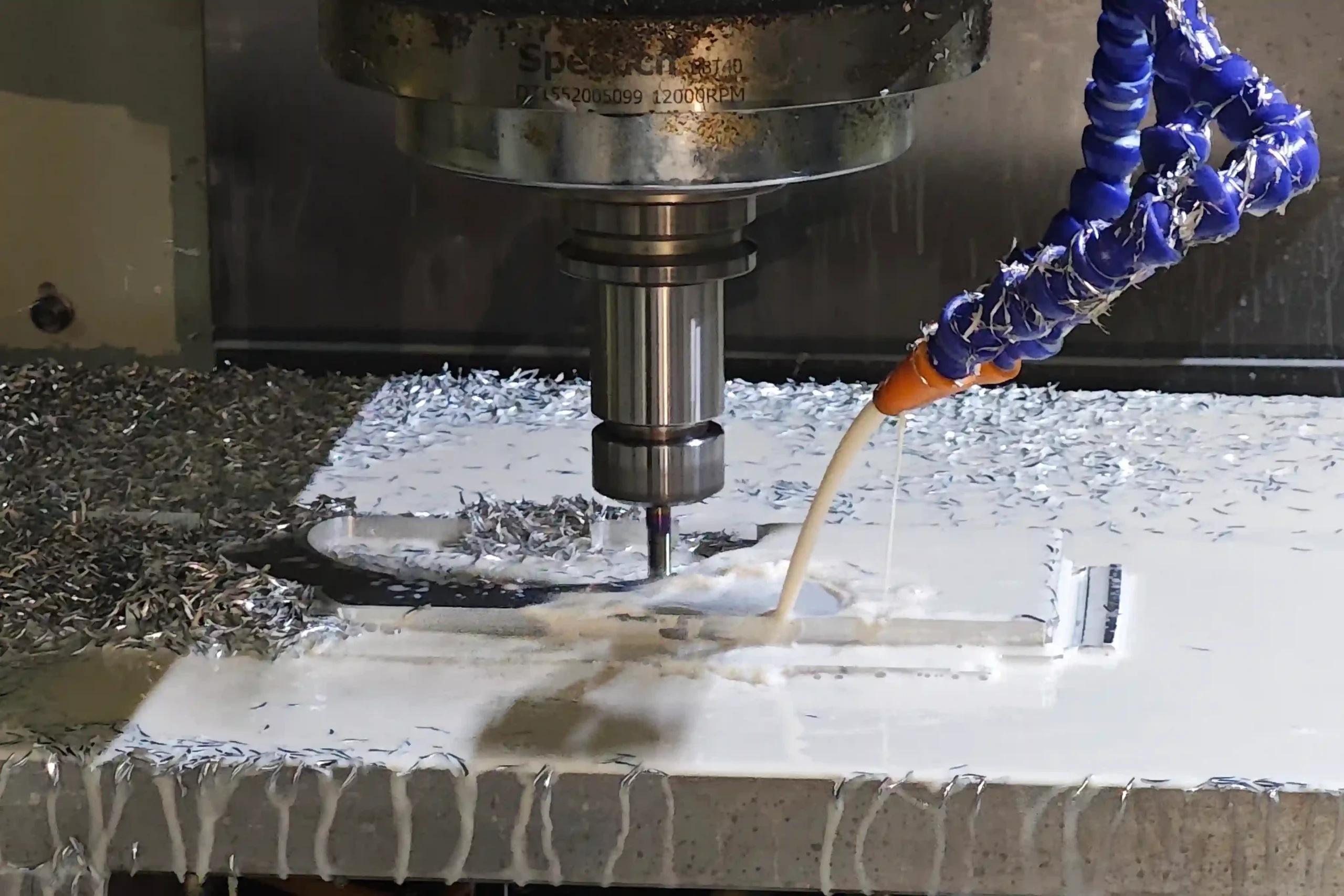
FastPreci translated the DFM decisions into a machining approach focused on protecting visible surfaces, limiting thin-wall deformation, and producing the functional undercuts needed for assembly.
Preserve the exterior appearance: The outer surfaces, brushed finish, and engraved graphics were treated as appearance-critical features. Machining was planned to avoid tool marks and handling damage on visible areas, with finishing and engraving requirements confirmed before production.
Manage thin-wall deformation: In areas with thin walls and substantial material removal, machining was sequenced to retain support during roughing. Controlled clamping, lighter finishing passes, and inspection after unclamping helped limit distortion and preserve the intended geometry.
Machine functional undercuts: The backplate undercuts were machined with attention to tool reach and clearance. Staged operations and suitable cutter access helped produce the clipping features without compromising the surrounding geometry.
Protect critical transitions: Machining was planned to maintain the intended wall transitions and avoid unnecessary stress on localized thin sections.
Project Outcome: From a Custom Design to a Finished Prototype
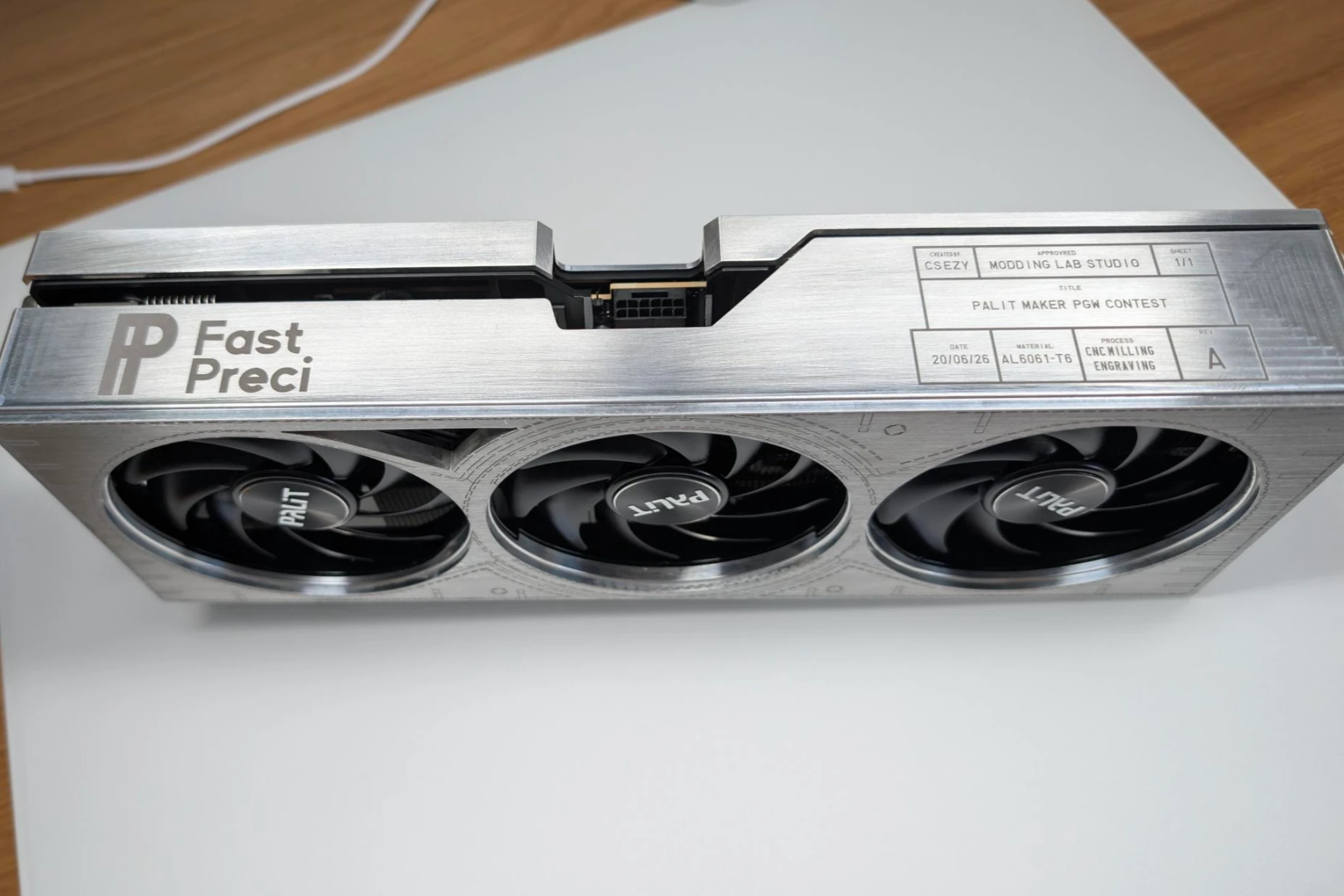
The custom GPU cover and matching backplate were manufactured, finished, inspected, and delivered. Assembly validation was completed successfully, confirming that the parts could be fitted as intended.
DFM review helped resolve manufacturing concerns before machining began. The revisions simplified geometry where possible while preserving the appearance and attachment features needed for the final application.
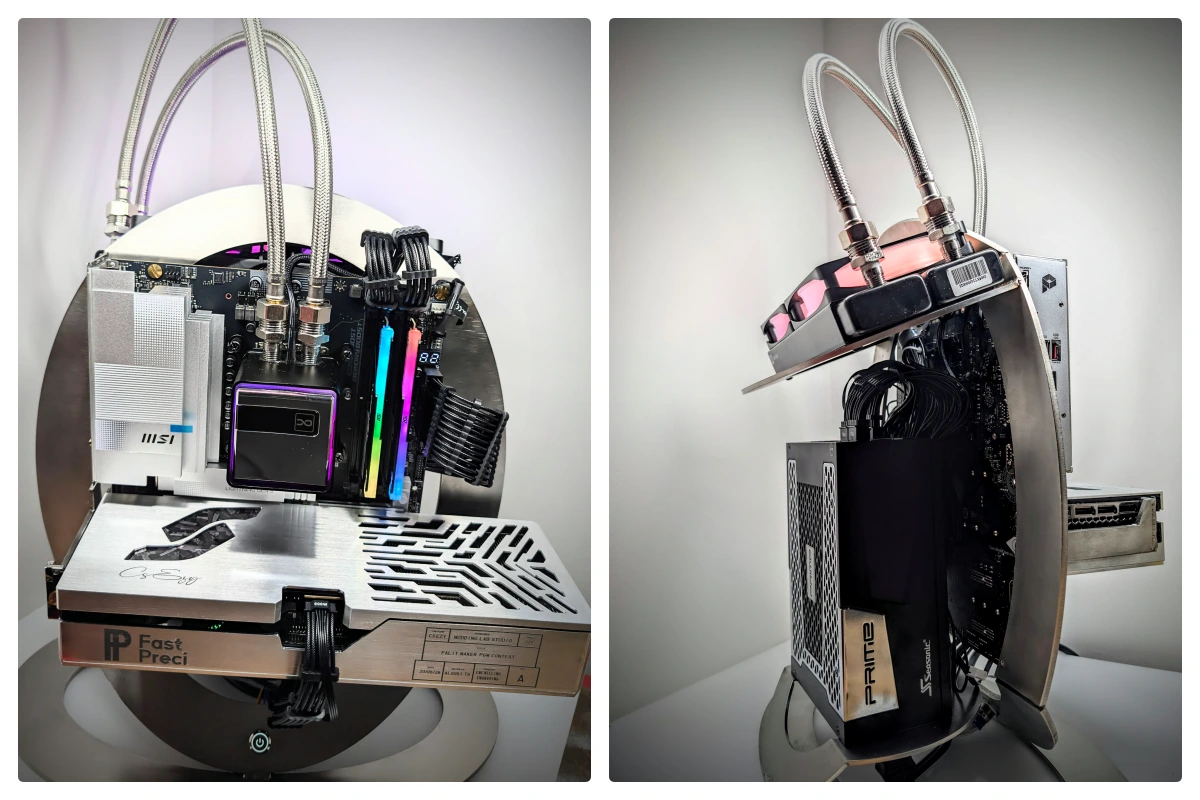
The parts became part of Julien’s larger creative PC build, intended to showcase metalworking craftsmanship and connect industrial manufacturing with the technology and PC-building community. The broader project was intended for presentation at Paris Games Week 2026.
A Customer Perspective
Coming from an industrial background in piping and welding, Julien has a strong appreciation for metalworking and the skills behind it. Exploring CNC machining with FastPreci offered another way to bring that craftsmanship into a custom PC project.
Reflecting on the collaboration, he shared:
“I sincerely want to thank FastPreci for the quality of their work and the kindness of everyone I’ve been able to interact with since the beginning of the project.”
For FastPreci, the project demonstrates the value of involving manufacturing engineers early in product development. When complex geometry, appearance, and assembly requirements intersect, effective DFM depends on understanding why a feature exists, discussing practical alternatives, and making design decisions collaboratively.
The project was also featured by Overclocking.com, which covered Julien’s Palit Maker project and the collaboration behind the custom GPU build.
Have a Challenging Part Design?
Complex geometries, thin walls, and functional features can make custom parts harder to manufacture. FastPreci works with your team to review designs, identify potential manufacturing challenges, and turn your ideas into finished parts.
Share your CAD files and drawings to get started.
Explore Our CNC Machining Services→
Frequently Asked Questions
1. Why was the wall thickness increased from 2 mm to 5 mm on the GPU cover?
The wall thickness was increased in specific areas of the GPU cover where substantial material needed to be removed during CNC milling. FastPreci recommended the change to reduce machining risk. After discussing the potential impact on appearance, the customer agreed to increase the thickness only in the affected areas rather than across the entire cover.
2. Should all undercuts be removed from a CNC-machined part?
No. Undercuts can increase machining complexity because they may restrict tool access, but some are essential to a part’s function. In this project, FastPreci reviewed the cover and backplate with the customer using an assembly model. Undercuts that could be removed were eliminated, while those required for attaching the backplate to the graphics card were retained.
3. Why does DFM matter for custom CNC-machined aluminum parts?
DFM helps identify potential manufacturing issues before machining begins. Depending on the design, reviewing wall thickness, tool accessibility, internal corners, and assembly features can help reduce manufacturing risk while preserving important functional and visual requirements. In this GPU cover project, DFM discussions led to targeted wall-thickness changes, selective undercut removal, recessed engraving, and revised wall transitions.