- FastPreci Supports Innovation: 4 Sponsorships Available for University & Nonprofit R&D Projects This October. Apply Now!

CNC Machining Services
FastPreci delivers precision-machined nylon parts from prototype to production, with controlled machining processes designed for moisture-sensitive engineering plastics.
All uploads are secure and confidential

Trusted by global clients — 4.7/5 on  Trustpilot









We machine nylon using 3-axis to 5-axis CNC milling and turning, with controlled processes to reduce deformation and maintain tolerance.
Small, complex precision components to large structural blocks and wear pads, using 3-axis to 5-axis machining.
Drilling, tapping, reaming, press-fit inserts, and assembly integration across all major nylon grades.
From 1.0 mm with dedicated fixturing to prevent deflection
Up to ±0.05 mm on stable features; tighter tolerances available with active process control.

Nylon requires process control beyond standard plastics due to moisture and thermal sensitivity.
Nylon expands after machining due to moisture uptake. We use dried stock and controlled storage conditions. For precision fits, moisture equilibrium targets are defined before final tolerance confirmation.
Low thermal conductivity causes localized heat and material softening. We use sharp tooling and air cooling to prevent melting and chip adhesion.
Flexible stock can deform under clamping forces. We apply part-specific soft jaw setups and distributed fixturing strategies.
These are the design issues that most often add cost or create tolerance failures in nylon CNC machining.
Avoid load-bearing blind threads → use press-fit or steel inserts
Design nylon-specific tolerances (do not copy metal tolerances directly)
Use ≥0.5 mm internal radii to reduce stress and improve machining stability
Always specify nylon grade (PA6, PA66, PA12, etc.)
Define mating material for sliding applications (steel vs polymer behaves differently)

Grade selection affects machinability, dimensional stability, and part performance in service.
General-purpose grade. Good balance of strength and machinability. Higher moisture absorption requires conditioning for tight-tolerance work.
Tensile strength: 65–80 MPa
Max temp: 90–130°C
Moisture absorption: High
Best for: Brackets, housings, wear pads
Higher strength and heat resistance than Nylon 6. Preferred where load and temperature demands are moderate to high. Also absorbs moisture but at slightly lower rates.
Max temp: 150–180°C
Glass-fibre reinforced. Significantly stiffer with higher tensile strength, but abrasive on tooling. Slower feeds required and tooling is monitored closely.
Tensile strength: 115–138 MPa
Max temp: 90–131°C
Cast rather than extruded, which reduces internal stress. Machines cleanly with good surface finish. Preferred for large blanks where residual stress in extruded stock would cause movement during machining.
Tensile strength: 75–85 MPa
Max temp: 100–130°C
Very low moisture absorption — dimensionally stable without conditioning. Lower stiffness than Nylon 6 or 6/6, suited to parts where flexibility and media resistance matter more than load capacity.
Tensile strength: 45–60 MPa
Max temp: 85–120°C
Molybdenum disulfide filler reduces friction and improves wear resistance. Used where parts run dry against metal or other surfaces. Similar machinability to unfilled Nylon 6.
We offer several surface finish options for machined nylon parts to balance cosmetic, dimensional, and functional requirements.
As Machined Standard output from the machining process. Typical Ra 1.6 to 3.2 depending on grade and operation. Adequate for most functional applications without additional processing. | Deburring Manual or mechanical removal of sharp edges and burrs. Standard on all parts. Reduces handling risk and improves assembly fit. |
Sanding Smooths tool marks and improves surface uniformity. Used where cosmetic appearance matters or where a more consistent Ra is needed across surfaces. | Polishing Applied to bearing or sealing surfaces requiring low Ra. Achievable on unfilled nylon grades. Glass-filled grades have limitations due to fiber exposure. |
Painting Nylon can be painted with a suitable primer. Adhesion requires surface preparation. Useful for identification, UV protection, or cosmetic requirements. |
FastPreci manufactures nylon CNC components used across industries where lightweight strength and durability are required.
Nylon offers dimensional stability and low moisture absorption, making it suitable for non-implantable equipment and prototypes.

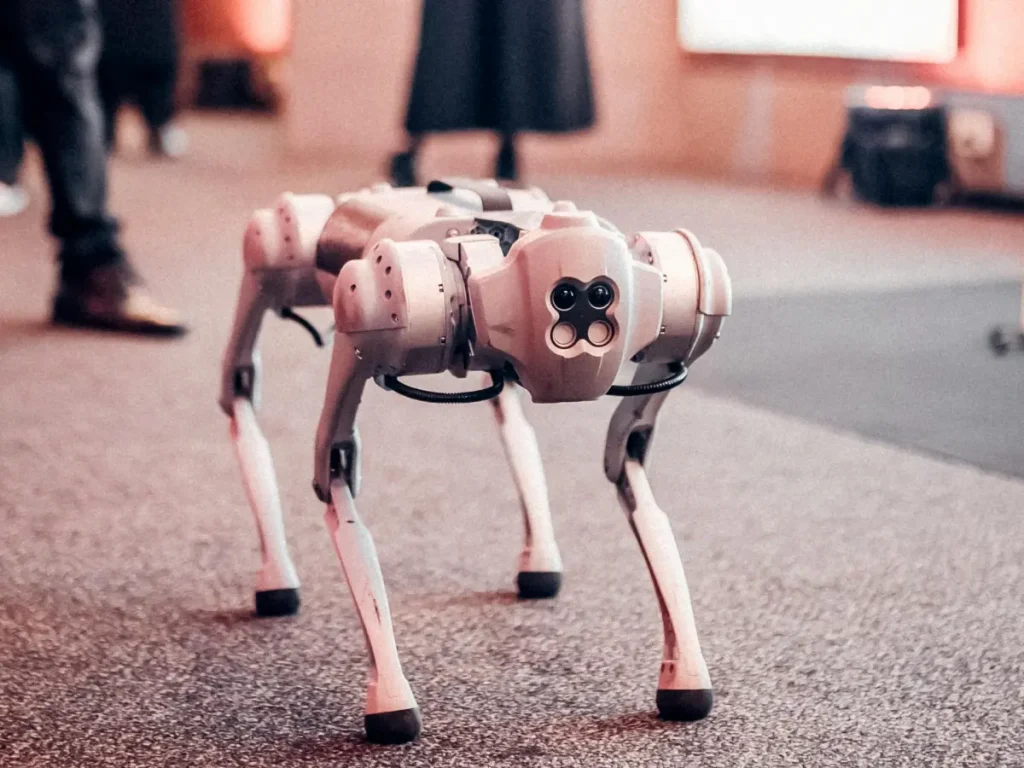
Nylon provides weight reduction and dry-running capabilities in joints and drive systems, reducing the overall mass of moving assemblies.
Nylon withstands exposure to heat and under-hood fluids, serving well in ancillary systems, fluid circuits, and pre-production parts.

Nylon delivers high dielectric strength and heat resistance for insulation and assembly components in low-to-medium voltage work.

Nylon allows for continuous dry running against metal surfaces, lowering friction in conveyor, packaging, and material handling systems.

Nylon maintains structural integrity while minimizing outgassing for process fluid handling and electrical isolation in contamination-sensitive environments.

Every project includes engineering review before production.
If a design shows risk of tolerance drift in nylon, we flag it during quotation to prevent downstream issues.

These materials are often used in similar applications, but the right choice depends on what problem the part needs to solve.
| Property | Nylon | POM | PTFE |
| Dimensional Stability | Moderate (1.5–2.5% moisture absorption) | High (<0.2%) | Low (<0.01%, but creeps) |
| Strength & Toughness | High | Moderate | Low |
| Friction & Wear | Good | Good | Excellent (COF ~0.05–0.10) |
| Chemical Resistance | Good | Good | Excellent |
| Load Bearing | Good | Good | Poor |
Not universally. Nylon excels at impact resistance; Delrin (POM) at dimensional stability. Choose based on your specific requirements—we can advise during quoting.
PA6 for general use, PA66 for strength, PA12 for moisture stability, glass-filled for stiffness.
Use sharp, polished tools with high rake angles and run adequate feed rates—low speeds increase dwell time and heat buildup, worsening stringing. Clear chips and control temperature using compressed air rather than coolant to avoid introducing moisture. For tapping, use sharp taps with wide flutes.
Moisture conditioning is the most critical step to bring parts to a stable size before final inspection, preventing ambient growth later. Other standard options include light abrasive finishing for cosmetics, heat marking for identification, and installing press-fit inserts.
We hold ±0.05 mm as a standard working tolerance. Tighter tolerances on specific features, in the ±0.02 mm range, are achievable with active process control and an agreed conditioning protocol. Tolerances of ±0.01 mm are generally unrealistic due to moisture-driven dimensional shifts.
Fastpreci specializes in CNC machining for custom parts, Please fill in the information below, and we will get back to you within hours.